


How to Fix Foot Drop Using Exercises, Bracing, and Supportive Footwear
Foot drop makes it difficult to lift the front of the foot when walking. You might notice your toes catching the ground, dragging slightly, or needing to lift your leg higher than usual just to clear the floor. Over time, this can make walking feel tiring, awkward, or unsafe.
Fixing foot drop isn’t about one quick solution. It’s about improving how you move by combining physiotherapy exercises, bracing when needed, and supportive trainers that help you walk more safely day to day.
This guide explains how each of these elements works together to support better balance, confidence, and mobility.
What causes foot drop and why does it affect walking?
Foot drop usually develops when the muscles that lift the foot become weak or when the nerves controlling them aren’t working properly. The peroneal nerve is often involved, but foot drop can also be linked to conditions such as neuropathy, stroke, multiple sclerosis, spinal problems, or injury.
These changes can lead to:
-
Difficulty lifting the toes
-
Catching the foot on rugs, thresholds, or uneven ground
-
Feeling unsteady when walking
-
A “high-stepping” walking pattern to avoid tripping
Because foot drop affects walking mechanics, targeted support is important to help reduce the risk of trips, slips, and falls. A physiotherapist or healthcare professional can help identify the underlying cause and guide treatment.
Which exercises help improve foot drop?
Exercises don’t replace medical care, but they play an important role in rebuilding strength and improving control. Physiotherapists usually start with simple, controlled movements before progressing to more functional exercises.
Common exercises used to support foot drop include:
Toe raises (dorsiflexion exercises)
Help activate the muscles that lift the front of the foot.
Ankle eversion strengthening
Supports ankle stability and helps the foot clear the ground more smoothly.
Ankle circles
Improve joint mobility and range of movement.
Resistance band exercises
Strengthen the ankle in multiple directions to improve control and balance.
Seated marching
Builds coordination and confidence in the early stages of recovery.
Step-up practice
Once appropriate, helps improve everyday movements like stairs and kerbs.
These exercises may feel subtle, but with consistency they can improve foot clearance, balance, and walking efficiency over time.
When is bracing recommended for foot drop?
A brace — often called an AFO (ankle-foot orthosis) — may be recommended when foot drop causes frequent dragging or instability. A physiotherapist might suggest bracing if:
-
The foot catches the ground regularly
-
There is significant nerve weakness
-
You’re recovering from a neurological condition
-
Extra stability is needed outdoors or on uneven surfaces
Bracing can help by:
-
Holding the foot in a safer lifted position
-
Reducing toe drag
-
Supporting balance with each step
-
Encouraging smoother heel-to-toe movement
Some people use an AFO short-term during recovery, while others use one long-term. Your physiotherapist can help decide what level of support is appropriate.

How do supportive trainers help with foot drop?
Trainers won’t cure foot drop, but the right design can make walking feel safer and more manageable while you’re strengthening or recovering.
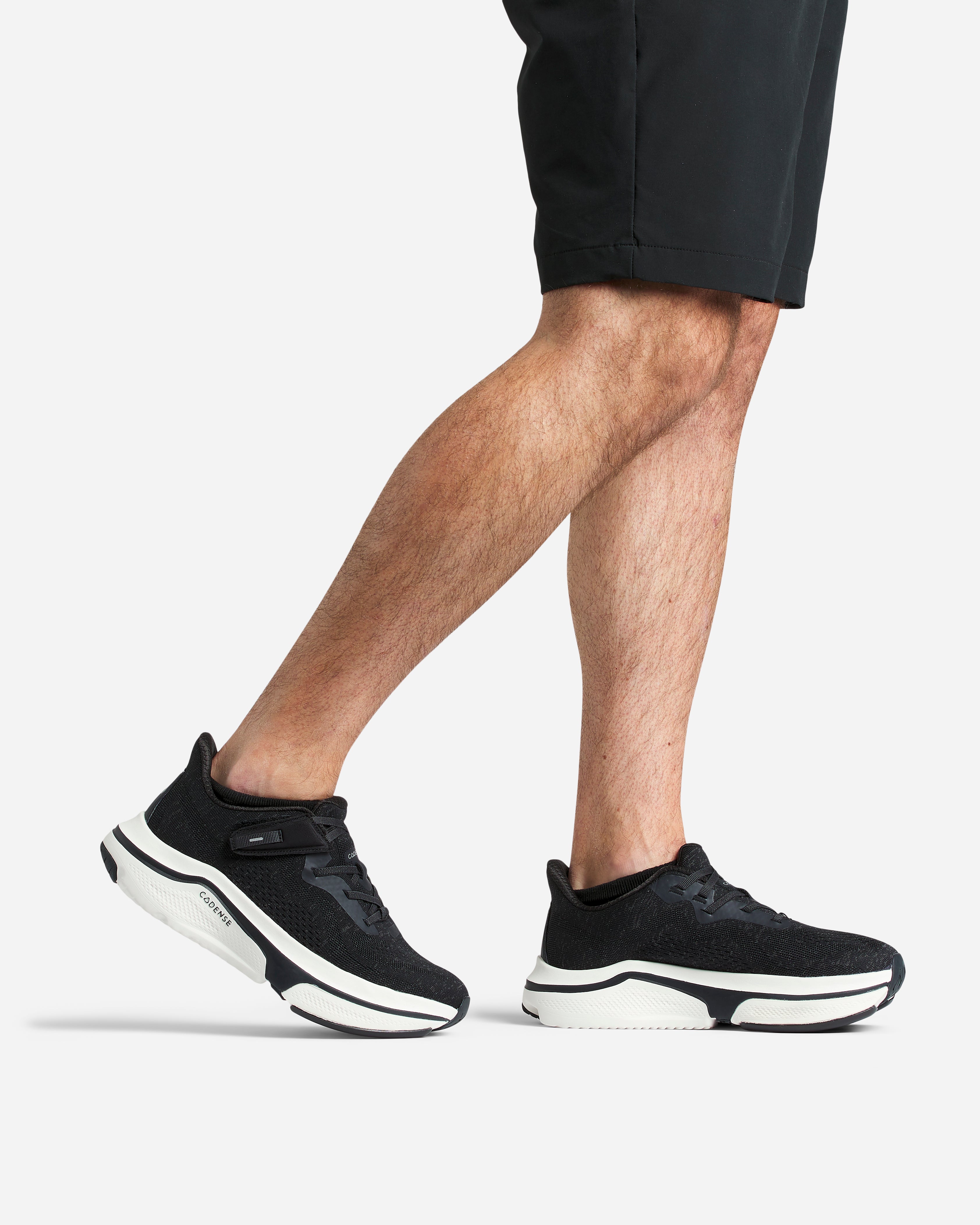
Cadense adaptive trainers are designed specifically for people with mobility challenges, including foot drop. Features that support safer walking include:
A wider, more stable base
Helps improve balance and keeps the foot steady during movement.
Lightweight, flexible soles
Reduce effort when lifting the foot and support more natural walking.
Rocker-style motion
Encourages forward movement and reduces the effort needed to clear the toes.
Secure but pressure-free fit
Supports the foot and ankle without discomfort or restriction.
AFO-friendly design
Wide openings and adaptable structure make Cadense trainers easy to wear with braces.
Together, these features help support smoother walking and reduce the chance of catching a toe or feeling unsteady.
Why combining exercises, bracing, and trainers works best
Foot drop is rarely managed with just one solution. The most effective approach usually layers support:
-
Daily physiotherapy exercises to build strength and control
-
Bracing when needed to reduce dragging and instability
-
Adaptive trainers to support every step
-
Gait training to rebuild healthier walking patterns
This combination supports both short-term safety and long-term improvement. As strength or nerve function improves, walking often becomes smoother and more consistent.
Signs your foot drop may be improving
With time and consistent support, you may notice:
-
Better control when lifting the toes
-
Fewer instances of foot dragging
-
Improved foot clearance when walking
-
Greater stability on uneven surfaces
-
Less fatigue over short distances
Progress is often gradual, especially when nerves are involved, but even small improvements are meaningful and worth noting.
When to seek professional support
Speak with a healthcare provider or physiotherapist if you notice:
-
New or worsening foot drag
-
Unexplained weakness
-
Changes in balance
-
Increased tripping or slipping
Early assessment helps identify the cause and ensures the right support is put in place.
Support safer walking with Cadense UK
Foot drop can feel overwhelming at first, but with the right mix of exercises, bracing, and supportive trainers, many people regain confidence and stability.
Cadense adaptive trainers are designed to support safer, more comfortable walking for people managing mobility and neurological challenges.
Explore supportive trainers for foot drop at:
https://cadense.co.uk/


