
Is Drop Foot Serious and When to Seek Professional Help
If you’ve noticed your toes dragging or found yourself lifting your leg higher than usual to avoid tripping, you may be experiencing drop foot. These changes aren’t just inconvenient — they can increase your risk of trips, slips and falls.
The seriousness of drop foot depends on its cause and your overall health, but it is considered a significant condition because it directly affects walking safety, balance and independence.
What Makes Drop Foot a Serious Condition?
Drop foot can develop due to nerve damage, muscle weakness, or neurological conditions such as stroke, multiple sclerosis, or cerebral palsy. Even mild cases can make everyday movement more demanding.
The condition becomes serious because it can lead to:
-
A higher risk of tripping on rugs, stairs or uneven pavements
-
Changes in gait that may strain the knees, hips and lower back
-
Reduced independence in daily mobility
-
Increased fatigue from compensatory movements, such as high-stepping
Recognising these risks early is important for maintaining safety and reducing the likelihood of accidents.
When Should You Seek Professional Help?
Early assessment is key. You should contact a GP, physiotherapist or healthcare professional if you notice:
-
Sudden or worsening toe dragging
-
Frequent trips or near-falls
-
Weakness in the lower leg or ankle
-
Numbness or tingling in the foot
-
Difficulty lifting the toes during walking
A professional can help identify the underlying cause and recommend appropriate treatment, such as physiotherapy, bracing or further investigation if needed.

What Treatments Can Help Manage Drop Foot?
Some underlying causes of drop foot may improve over time, but supportive management is often necessary to maintain safer walking.
Physiotherapy exercises
-
Toe raises and dorsiflexion exercises to strengthen lifting muscles
-
Ankle mobility and stability drills
-
Gait training to improve walking mechanics
Bracing
-
An ankle-foot orthosis (AFO) can hold the foot in a lifted position
-
Helps prevent the toes from catching the ground
-
Provides added confidence during walking
Supportive trainers
-
A wide, stable base to improve balance
-
Lightweight, flexible soles to encourage natural movement
-
Designs compatible with braces
-
Reduced strain and fatigue during daily walking
These approaches work together to lower risk and support steadier steps, even if recovery is gradual.
How Can Trainers Help Reduce Trips, Slips and Falls?
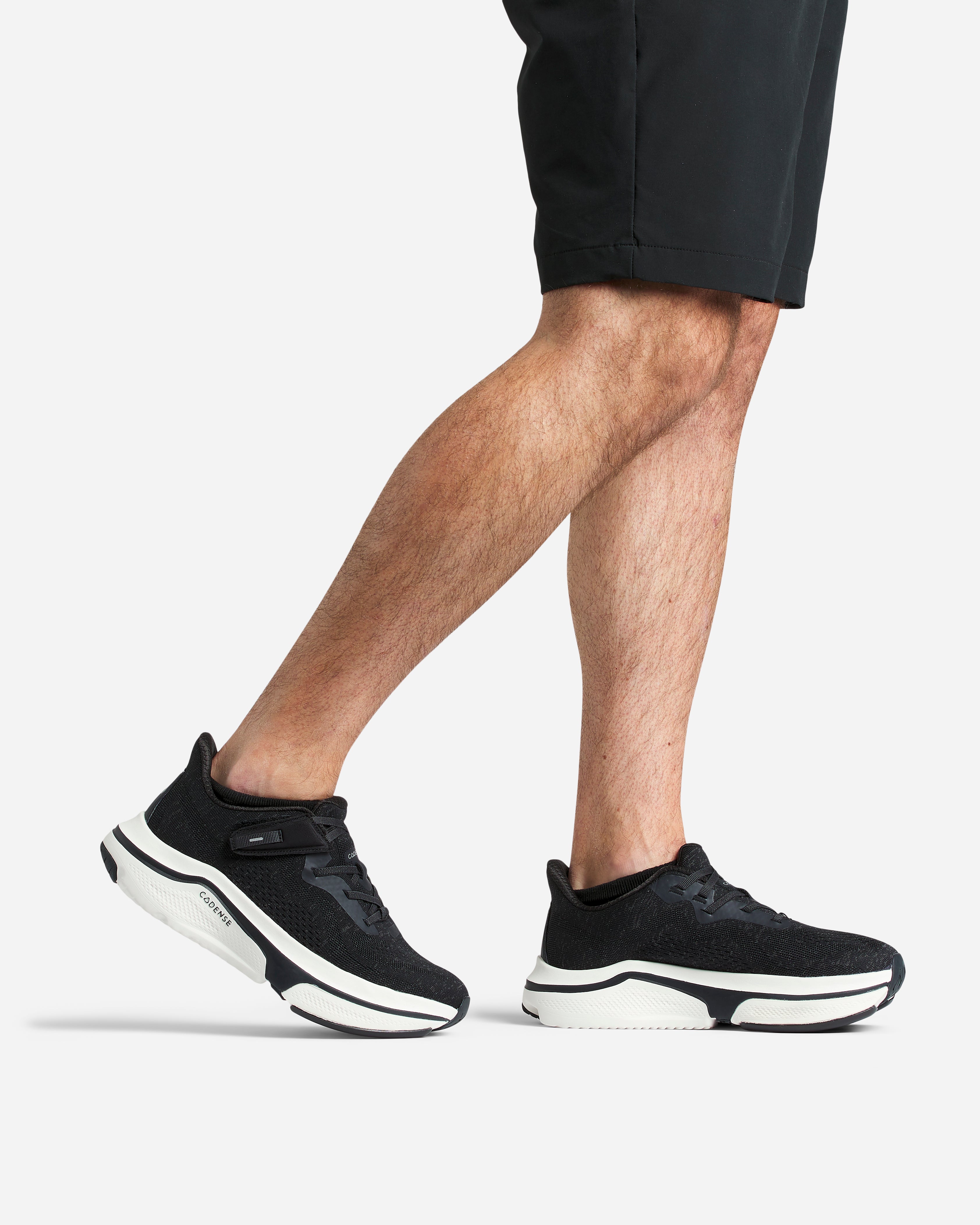
Adaptive trainers, such as those designed by Cadense, are built to support safer movement while drop foot is being treated or managed.
They help by:
-
Providing a secure, supportive fit to stabilise the foot
-
Offering a wide toe box to improve balance
-
Encouraging smoother movement with flexible soles
-
Working comfortably with AFO braces
-
Reducing fatigue during everyday walking
Trainers don’t cure drop foot, but they are an important part of managing it safely and confidently.
What’s the Best Next Step?
Drop foot is a serious mobility concern, but early intervention and the right support can make a meaningful difference.
Key steps include:
-
Seeking early advice from a physiotherapist or healthcare provider
-
Following a consistent strengthening and mobility programme
-
Using an AFO if recommended
-
Wearing adaptive trainers designed for stability and comfort
Monitoring symptoms and acting promptly can reduce fall risk and help maintain independence.
Move More Safely With Cadense
Drop foot can affect your confidence and safety when walking, but early recognition and the right support can help you stay active.
If you’re looking for trainers designed specifically for mobility challenges, explore the Cadense collection at: