

Can Foot Drop Be Cured and What You Can Do to Improve Walking
Foot drop makes it difficult to lift the front of your foot while walking, which can lead to dragging, tripping, and feeling unsteady on your feet. It’s natural to wonder whether it can be completely cured. The answer depends largely on what is causing it.
Foot drop may be linked to:
-
Nerve damage (such as peroneal nerve or spinal nerve injury)
-
Neurological conditions (including stroke, multiple sclerosis, or cerebral palsy)
-
Muscle weakness or injury
-
Other medical conditions affecting the lower leg
Some cases improve fully with treatment, particularly when the underlying cause is temporary or reversible. Others may require longer-term management. Even when a complete cure isn’t possible, there are effective ways to improve walking and reduce the risk of trips, slips and falls.
What treatments help foot drop?
Treatment is usually tailored to the individual and depends on the severity and underlying cause. Physiotherapy is often central to management and works alongside other supportive approaches.
Physiotherapy exercises may include:
-
Ankle dorsiflexion exercises to strengthen the muscles that lift the foot
-
Toe raises and seated marching to improve coordination and control
-
Resistance band work to build strength in the ankle and lower leg
-
Step-up drills or gait training to encourage safer, more consistent walking patterns
Physiotherapists focus on improving muscle strength, joint flexibility and movement coordination to support everyday mobility.
Bracing options
An ankle-foot orthosis (AFO) may be recommended to:
-
Hold the foot in a lifted position during walking
-
Prevent the toes from catching the ground
-
Provide added stability and confidence
Some people use an AFO temporarily during recovery, while others may need one longer term.
Can foot drop be cured with surgery?
In certain cases, particularly where nerve damage is significant and not improving, surgical intervention may be considered. Surgery is not always required and depends entirely on the underlying cause and individual circumstances.
A consultant or specialist can assess whether surgery is appropriate and discuss realistic outcomes. Even where surgery is performed, physiotherapy and supportive trainers remain important for maintaining safe walking mechanics.

How do supportive trainers improve walking with foot drop?
While trainers cannot cure foot drop, the right pair can make walking safer and more comfortable, particularly while recovery or long-term management continues.
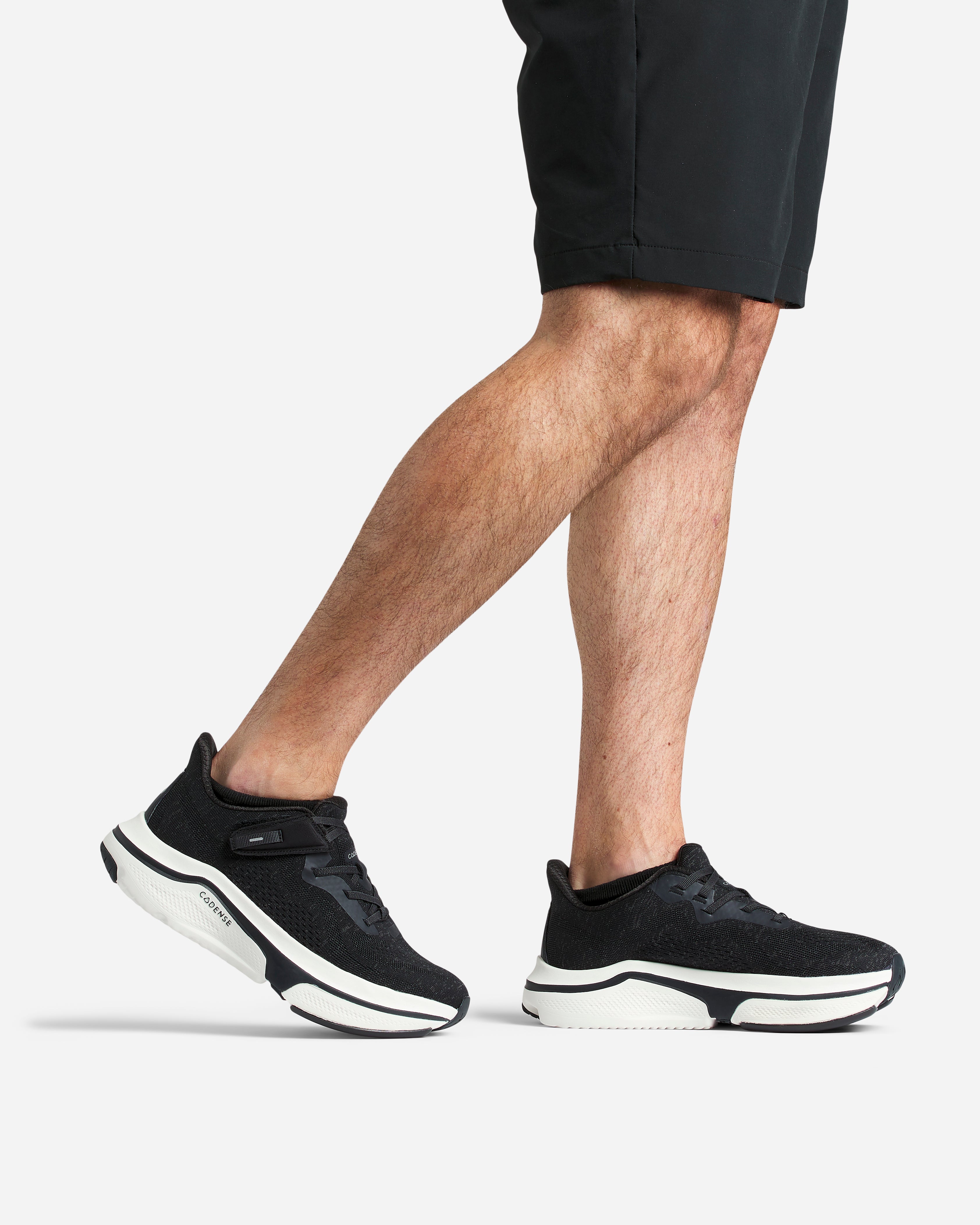
Cadense adaptive trainers are designed specifically for people with mobility challenges. Features that support walking include:
-
Wide toe box for improved balance and reduced pressure
-
Lightweight, flexible soles to support more natural movement
-
Supportive fit to help reduce fatigue and improve stability
-
Easy on/off design to support independence
-
AFO compatibility for those wearing braces
These features help reduce the risk of accidents, trips, slips and falls while complementing physiotherapy and other treatments.
How can you support improvement at home?
Even if foot drop isn’t fully curable, you can take practical steps to improve mobility:
-
Follow your physiotherapy exercises consistently
-
Use braces or orthotics as advised
-
Wear adaptive trainers that support safer movement
-
Keep walking areas clear of clutter and uneven hazards
-
Use handrails where available
-
Monitor changes and discuss progress with your healthcare team
Small, consistent habits can make a meaningful difference in walking confidence and safety.
When should you seek professional help?
Speak with a healthcare professional if you notice:
-
Increased foot dragging
-
Sudden weakness or numbness
-
Frequent tripping or slipping
-
Changes in gait that make walking feel unsafe
Early assessment can help identify potentially reversible causes and ensure you receive the right combination of physiotherapy, bracing and supportive footwear.
Improve Walking With Foot Drop
Foot drop may not always be completely curable, but it is often manageable. Combining targeted physiotherapy exercises, bracing when needed, and supportive trainers can make walking steadier, safer and more comfortable.
If you’re looking for adaptive trainers designed to support daily mobility, explore the Cadense collection at: