How the Best Trainer for Foot Drop Works With Braces and Orthotics
Foot drop changes the way people walk. Instead of a smooth heel-to-toe motion, the front of the foot may drag or slap the ground, increasing the risk of trips and falls. For many people, braces like ankle-foot orthoses (AFOs) or custom orthotics are part of daily life. But even the best brace cannot do its job properly without the right trainer.
The best trainer for foot drop is not just about cushioning or style. It needs to work with braces and orthotics, not against them. When footwear and support devices are mismatched, comfort drops, stability suffers, and walking becomes harder than it needs to be.
This guide explains how supportive trainers and braces are meant to work together, what to look for in a trainer, and why fit matters just as much as the device itself.
Why Trainers Matter When You Use a Foot Drop Brace
A brace is designed to assist with foot positioning and ankle control. Trainers provide the foundation that holds everything in place. If the trainer is too narrow, too flexible, or poorly structured, the brace may shift, rub, or fail to offer consistent support.
Many people assume that any trainer will work with an AFO. In reality, some trainers make foot drop symptoms worse by compressing the brace, forcing awkward angles, or limiting proper movement.
The best trainer for foot drop creates space for the brace, keeps the foot stable, and allows the brace to function as intended during walking.
How the Right Trainer Supports an AFO
Not all braces are the same. Some are rigid, some are semi-rigid, and others are designed to be low profile. Regardless of type, supportive trainers share a few key roles.
First, the trainer must securely anchor the brace. A firm heel counter helps prevent side-to-side movement, which improves balance and reduces fatigue. Without that structure, the brace may feel unstable even if it fits correctly.
Second, the trainer should allow a smooth gait pattern. Trainers with a stable sole and a mild rocker can help compensate for limited ankle motion, making walking feel more natural and less forced.
Finally, the trainer must accommodate volume. Braces add bulk, especially around the ankle and midfoot. Trainers that are too shallow or narrow can cause pressure points, pain, or skin irritation.
Working With Orthotics and Custom Inserts
Orthotics are often prescribed alongside braces or on their own to improve foot alignment and pressure distribution. The best trainer for foot drop should have a removable insole to make room for these inserts.
When a trainer does not allow for orthotics, people may stack inserts on top of factory insoles or force them into tight spaces. This can raise the foot too high, reduce stability, or cause heel slippage.
A proper trainer allows the orthotic to sit flat and stable inside, keeping the foot aligned whilst walking. This alignment supports the brace and reduces uneven wear on both the trainer and the device.
Key Trainer Features That Work Best With Braces
Whilst brands and models vary, certain design features consistently support foot drop braces and orthotics.
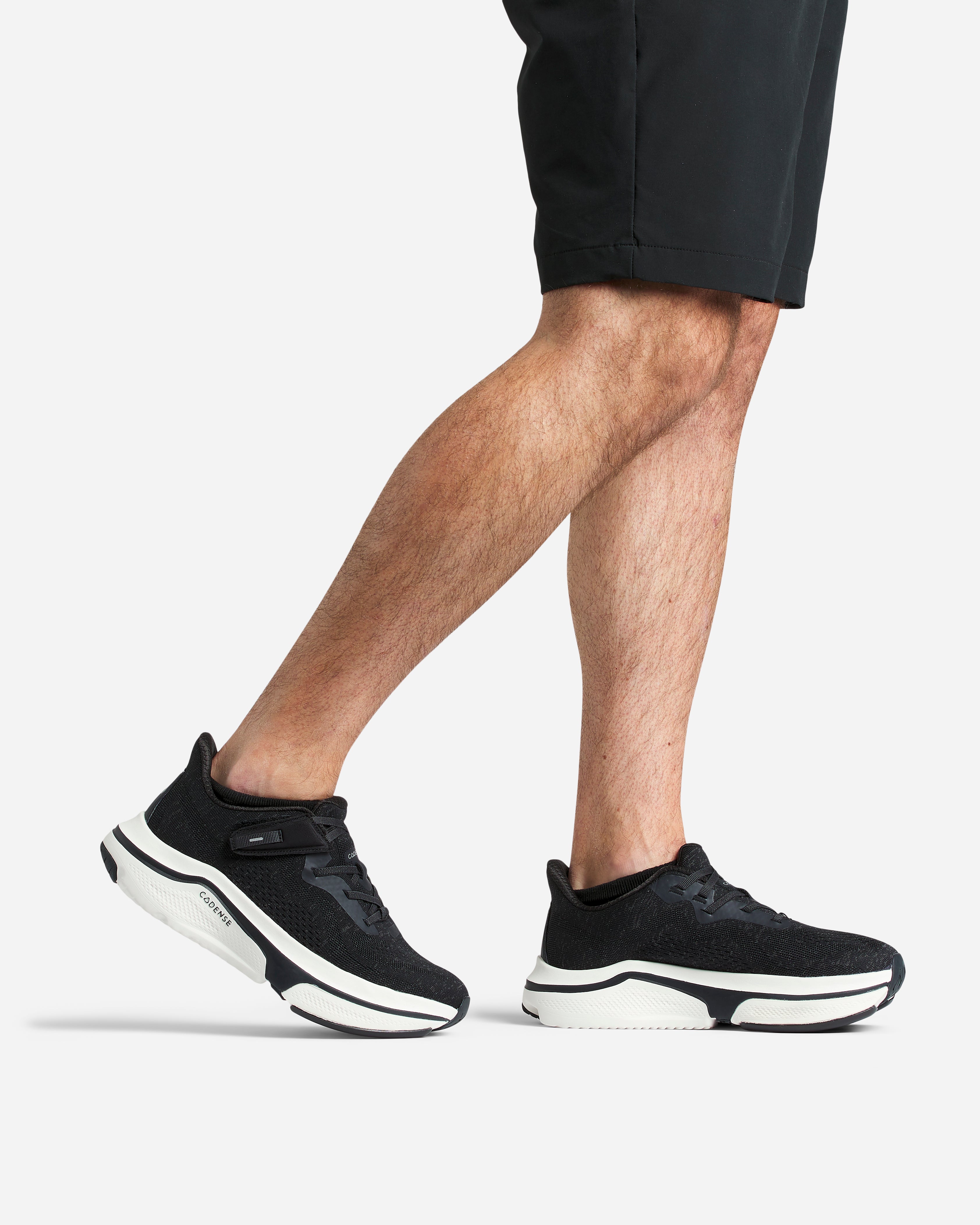
A wide opening makes it easier to put trainers on and off, especially for people with limited mobility or hand strength. Trainers that open fully also make it easier to position the brace correctly inside.
Adjustable closures are another important feature. Laces, straps, or hybrid systems allow for a customised fit around the brace. Slip-on trainers often lack the adjustability needed to secure a brace safely.
Firm soles improve stability. Trainers that bend too easily in the middle may feel comfortable at first but often lead to instability when paired with a brace. A supportive sole helps maintain balance and reduces tripping risk.
Adequate depth ensures the foot, brace, and orthotic can fit without crowding. Extra-depth trainers are often a better option than sizing up, which can cause heel slippage and an uneven gait.

Why Fit Matters More Than Trainer Size
Many people try to solve brace fit issues by buying trainers one or two sizes larger. Whilst this may create more space, it often introduces new problems.
Oversized trainers can throw off balance, increase dragging, and make walking less predictable. The foot may slide inside the trainer, which reduces the effectiveness of both the brace and orthotic.
The best trainer for foot drop fits the foot length correctly whilst offering extra width or depth where needed. This allows the brace to sit securely without compromising stability.
Trying trainers on with the brace and orthotic in place is essential. A trainer that feels fine without them may feel completely different once support devices are added.
Walking Comfort and Long-Term Use
Foot drop is often a long-term condition, which means comfort over time matters. Trainers that work well for a short walk may not hold up during extended wear.
Pressure points around the ankle or toes can become painful after hours of walking. Poor ventilation may lead to skin irritation. A lack of support can cause fatigue in the knees, hips, or lower back.
The best trainer for foot drop supports consistent use throughout the day. It should feel stable during short walks and longer periods of standing or movement.
Why Trainers and Therapy Must Work Together
Trainers do not replace therapy or braces. They support them. Physical therapy focuses on strength, coordination, and movement patterns. Braces help guide the foot. Trainers create an environment where both can function properly.
Wearing inappropriate trainers can undo progress made in therapy by encouraging poor movement habits or increasing fall risk. On the other hand, the right footwear can reinforce safer walking patterns and boost confidence.
This is especially important for people transitioning from therapy to everyday walking. Trainers that support both braces and orthotics help bridge that gap.
Choosing Trainers With Realistic Expectations
No trainer cures foot drop. The goal is safer, more stable walking with fewer obstacles. The best trainer for foot drop works quietly in the background, supporting the brace, accommodating orthotics, and reducing daily frustration.
Comfort, stability, and compatibility matter more than trends or brand names. Taking the time to find footwear designed to work with support devices can make a noticeable difference in daily mobility and confidence.
Make Everything Easier
Foot drop requires a team approach. Braces, orthotics, therapy, and footwear all play a role. When trainers are chosen carefully, they enhance the effectiveness of braces and make walking feel more controlled and secure.
If you or someone you care for uses a brace or orthotic, start with trainers designed to support them. The right pair will not just fit better — it will help everything else work better, too.
Explore Cadense adaptive trainers designed for mobility challenges at cadense.co.uk.