How Trainers That Help Prevent Falls Support Balance and Safer Walking
Maintaining the ability to walk safely is one of the most significant factors in preserving independence as we age or manage mobility challenges. It's not just about getting from point A to point B; it's about the confidence to participate in life — whether that's a stroll through a museum, navigating a supermarket, or simply moving around your own home without the constant "fear of the floor."
When balance or sensation begins to decline, the world can start to feel like a series of obstacles. However, mobility is a "use it or lose it" asset. The right footwear acts as your primary interface with the world, providing the stability and sensory feedback necessary to keep moving safely.
The Invisible Shift: How Foot Changes Impact Your Stride
Walking is a complex neurological and mechanical feat. As we age or due to certain health conditions, several subtle shifts occur that can turn a routine walk into a high-risk activity.
1. The Loss of "Ground Feel" (Proprioception)
Proprioception is your body's ability to sense its position and movement. The soles of your feet are packed with sensory receptors that tell your brain exactly what kind of surface you are standing on. Over time, these receptors can become less sensitive. If your trainers are too thick or "mushy," they muffle this vital information, leaving your brain guessing and increasing the likelihood of a stumble.
2. Reduced Ankle Strength and Foot Drop
Strong ankles are the stabilisers of the human body. When ankle strength wanes, your gait may change to a shuffling style. This often leads to foot drop, where the front of the foot doesn't lift high enough during the swing phase of a step. This is a primary cause of trips on carpets, door thresholds, or uneven pavements.
3. The Fatigue Cycle
Walking in heavy, poorly fitted trainers requires more energy. As muscles tire, your form breaks down. Fatigue leads to lower toe clearance, meaning you are more likely to catch your toe on an obstacle late in the afternoon than you were in the morning.
The Anatomy of a Fall-Prevention Trainer
If you're looking to reduce the risk of trips, slips, and falls, you have to look past the brand name and evaluate the engineering. A safe trainer should feel like an extension of your body, not an anchor attached to it.
Wide Toe Box: The Foundation of Balance
Most traditional trainers are tapered at the front for style, which pinches the toes together. For maximum stability, your toes — especially the big toe — need to be able to spread out and splay. A wide toe box creates a larger surface area for your base of support, which significantly improves your lateral (side-to-side) balance.
Lightweight and Flexible Soles
A heavy trainer makes every step a workout. To prevent trips, you need a lightweight sole that allows for a natural roll of the foot. Flexibility is equally important; the trainer should bend where your foot bends, at the ball of the foot. This ensures that you can push off effectively, maintaining forward momentum and a clearer swing phase.
Secure and Adaptive Closures
Slip-ons are tempting for their convenience, but they are often the least stable choice. If your heel slips out of the trainer even slightly, your brain has to work twice as hard to stabilise your gait.
-
Hook-and-loop (Velcro) straps offer the security of a lace-up trainer with the ease of a slip-on
-
Lacing systems allow you to tighten specific areas of the trainer to accommodate narrow heels or wide midfoots
Non-Slip Outsole Geometry
The bottom of the trainer should provide grip without being sticky. A good non-slip outsole uses rubber compounds that maintain traction on wet tile or polished wood. Look for a tread pattern that channels water away from the centre of the sole, similar to how a car tyre works.

Synergy: Footwear Meets Physical Therapy
A trainer is a tool, but it works best when paired with a proactive approach to physical health. Footwear and therapy should be viewed as a partnership.
Strengthening and Gait Training
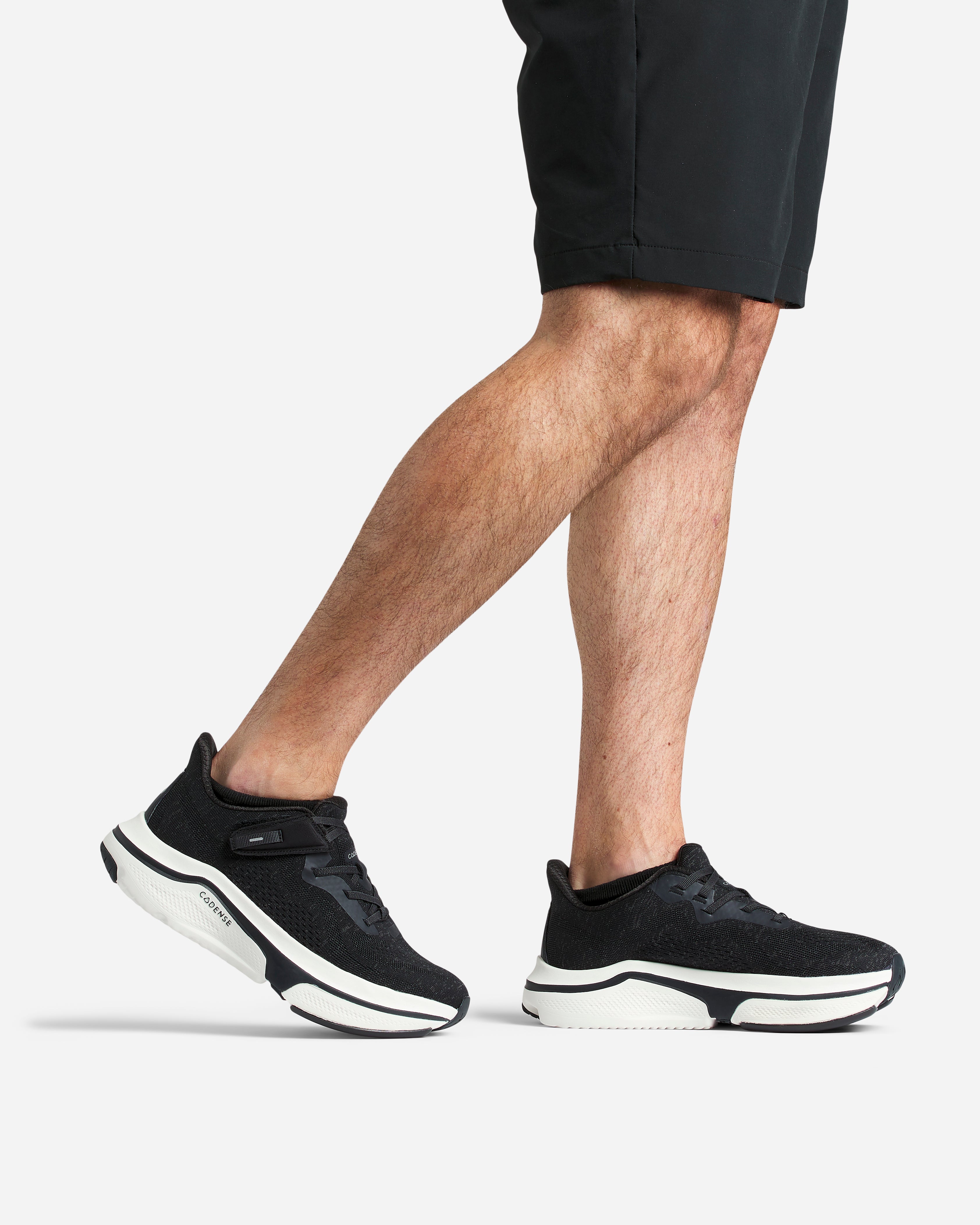
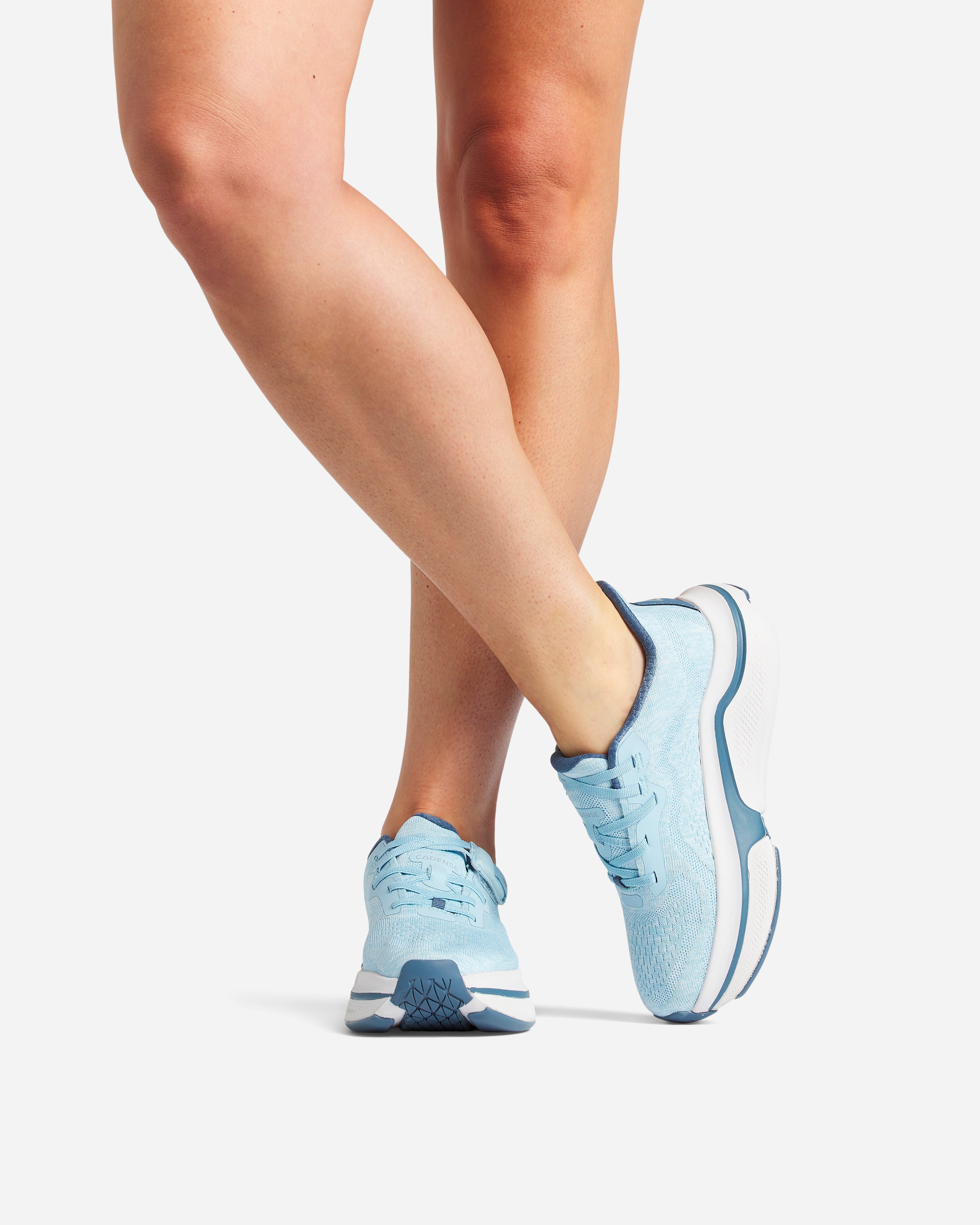
Whilst a supportive trainer helps you walk, physical therapy helps you walk better. A physiotherapist can provide specific exercises to strengthen the tibialis anterior (the muscle that lifts your toe) and the gluteus medius (the muscle that keeps your hips level). When your muscles are primed, a trainer like a Cadense — which is designed to help clear obstacles with its variable friction technology — becomes even more effective.
Complementing Braces and AFOs
For those who require an Ankle-Foot Orthosis (AFO), finding footwear is notoriously difficult. Many people end up wearing trainers that are two sizes too big just to fit the brace. This creates a significant trip hazard on the other foot. Adaptive footwear is designed with extra depth and specialised entry points to accommodate braces whilst maintaining a snug, safe fit on both feet.
Practical Guide to Choosing Your Next Pair
Shopping for trainers when mobility is a concern requires a different strategy than shopping for fashion. Here is how to ensure you get the right fit.
When selecting footwear for stability and long-term health, the structural integrity of the back and interior of the trainer is paramount. You should look for a heel counter that is firm and sturdy — a simple test is to press on the back of the trainer to ensure it doesn't collapse easily. This keeps the heel from rolling or wobbling, providing a secure foundation for every step. Additionally, look for an insole that is removable, as this allows you to swap in custom orthotics or AFOs, ensuring the trainer can be tailored to your specific orthopaedic needs rather than relying on a generic factory liner.
Comfort and Mechanics
The performance of a trainer during movement is largely dictated by its middle layers and overall mass. The midsole should be firm but responsive, striking a balance that provides ground feel whilst protecting joints from the impact of hard surfaces. Finally, consider the weight of the footwear — ideally aiming for under 10–12 ounces per trainer — as keeping them lightweight significantly reduces muscle fatigue during long walks, allowing you to maintain a natural gait without the extra strain of heavy materials.
Shopping Tips
-
The "Late Day" Rule: always try on trainers in the late afternoon, as your feet naturally swell throughout the day — a trainer that fits in the morning might be uncomfortably tight by 5:00 PM
-
The "Indoor Trial": wear your new trainers inside your home for at least 30 minutes before committing to them, walking on both carpet and hard floors to check for catching or slipping
-
Check the "Wear Pattern": look at your old trainers — if the soles are worn down on one side, it's a sign that your gait is uneven; show this to a specialist or physiotherapist as it can help them recommend the right support
Reclaim Your Confidence
The transition to using more supportive or adaptive footwear isn't a sign of "giving in" to age; it's a sign of taking control of your future. By choosing trainers that prioritise stability, lightweight movement, and a wide base of support, you are reducing the cognitive load on your brain.
When you don't have to worry about every single step, you can return your focus to the things that matter — spending time with family, exploring your community, and maintaining your zest for life.
Explore Cadense adaptive trainers, designed to improve balance and daily mobility at cadense.co.uk.