Why Supportive Trainers Are Essential for Seniors to Stay Steady on Their Feet
For many of us, the "fear of falling" eventually becomes a quiet, persistent background noise in our daily lives. It changes how we navigate the kitchen, which stairs we choose to climb, and how often we say "yes" to a walk in the park. But whilst we often focus on things like hip strength or balance exercises — which are undeniably important — we frequently overlook the very foundation of our movement: our trainers.
Walking isn't just a mechanical process of moving legs; it's a complex sensory experience. As we age, the feedback loop between our feet and our brain can become a little "fuzzy." This is why choosing the right footwear isn't just a fashion choice or a matter of comfort; it is a critical safety intervention.
In this guide, we'll explore how the right trainers serve as a primary tool for maintaining independence and how you can select the best pair to keep you steady on your feet.
Understanding the "Why": How Ageing Changes Your Gait
Before looking at the trainers themselves, it's helpful to understand what is happening biologically. Several factors contribute to why walking feels riskier as the years pass:
-
Reduced Proprioception: This is your body's ability to sense its position in space. Over time, the nerves in your feet may become less sensitive, meaning your brain doesn't get a clear "map" of the ground beneath you.
-
Sarcopenia (Muscle Loss): We naturally lose muscle mass as we age, particularly in the calves and the small muscles of the feet. This leads to a weaker push-off and less stability during the swing phase of a step.
-
The "Shuffle" Gait: To compensate for feeling off-balance, many seniors subconsciously begin to take shorter, flatter steps. Whilst this feels safer, it actually increases the risk of toe-catching on rugs or uneven pavements.
The Anatomy of a Supportive Trainer: What to Look For
Not all "comfortable" trainers are safe. A plush, marshmallow-like trainer might feel great for five minutes, but it can actually decrease stability by masking the ground and causing your ankle to wobble. Here is the blueprint for a trainer designed for fall prevention:
1. The Wide Toe Box: Your Natural Stabiliser
Think of your foot like a tripod. For a tripod to be stable, the legs need to be spread out. A narrow, pointed trainer squeezes your toes together, effectively "folding" your tripod. A wide toe box allows your toes to splay naturally. When your big toe has room to stay straight, it acts as a powerful lever to keep you upright.
2. Low-Profile, Firm Midsoles
Whilst some cushioning is necessary for joint protection, too much squish is dangerous. You want a sole that provides ground feedback. A thinner, firmer sole allows the nerves in your feet to communicate more effectively with your brain, letting you know exactly when you've stepped on a slope or a pebble.
3. Non-Slip, Bevelled Outsoles
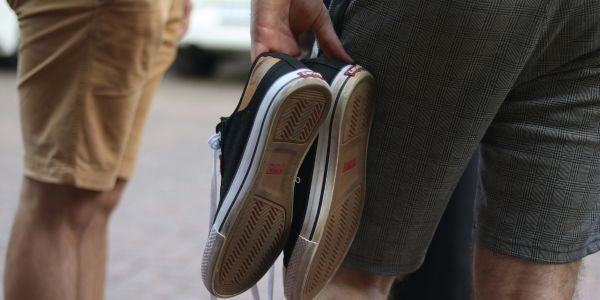
The tread on your trainer is your primary defence against slips. Look for rubberised outsoles with multi-directional patterns. Additionally, a bevelled (rounded) heel can help facilitate a smoother heel-to-toe transition, reducing the jarring impact that can sometimes throw a senior off-balance.
4. Secure Closures (More Than Just Laces)
A trainer must be part of your foot, not a separate object your foot is "riding" in. Slip-ons or mules are notorious for causing falls because the heel can slide out, or the foot can rotate inside the trainer.
-
Hook-and-loop (Velcro) straps are excellent for those with arthritis who struggle with laces
-
Bungee laces offer a snug, adaptive fit that moves with your foot if it swells during the day

The Role of Adaptive Footwear and Orthotics
For many, standard footwear isn't enough to address specific medical challenges. Conditions like Foot Drop (the inability to lift the front part of the foot) or extreme swelling (oedema) require specialised solutions.
Working with Braces and AFOs
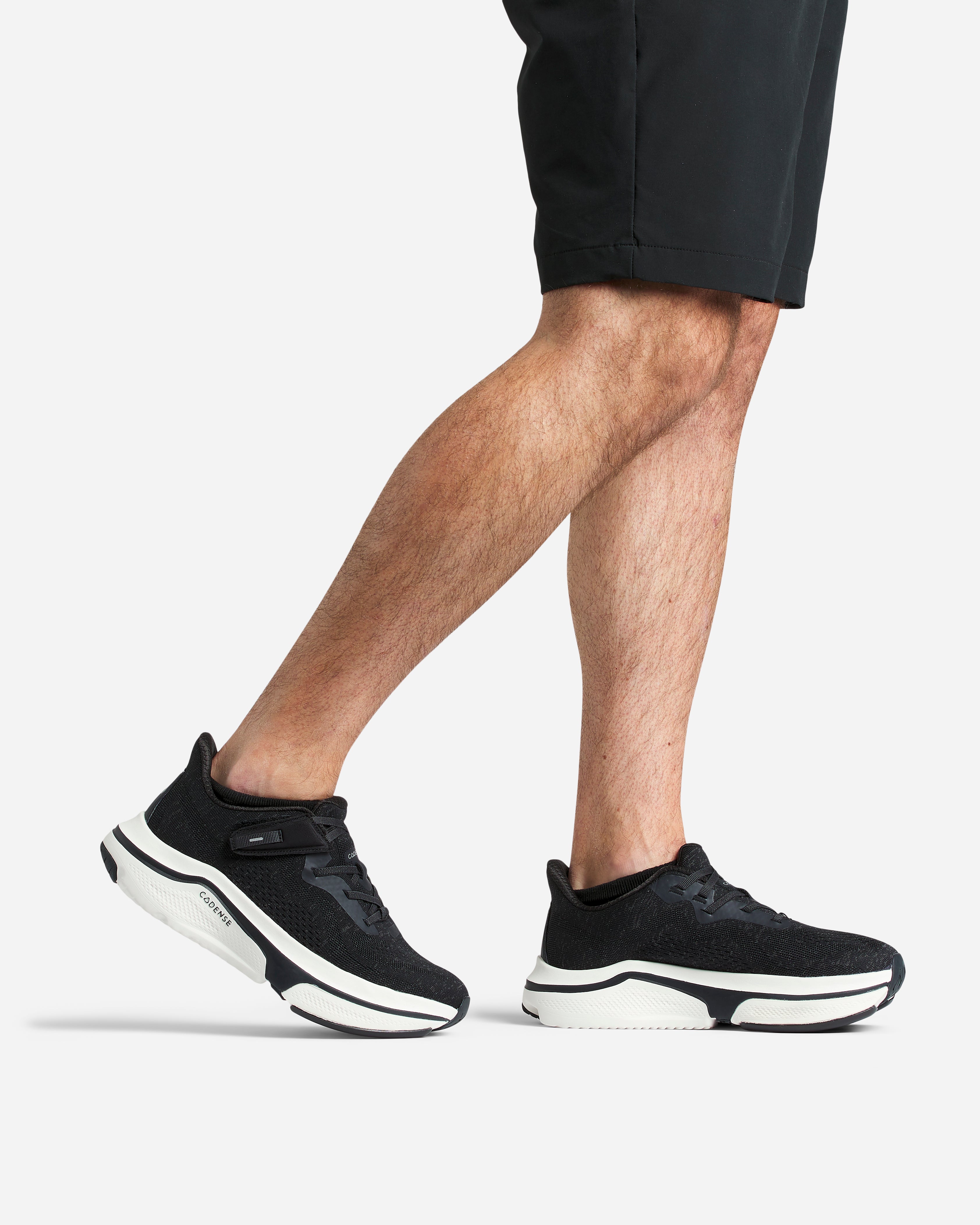
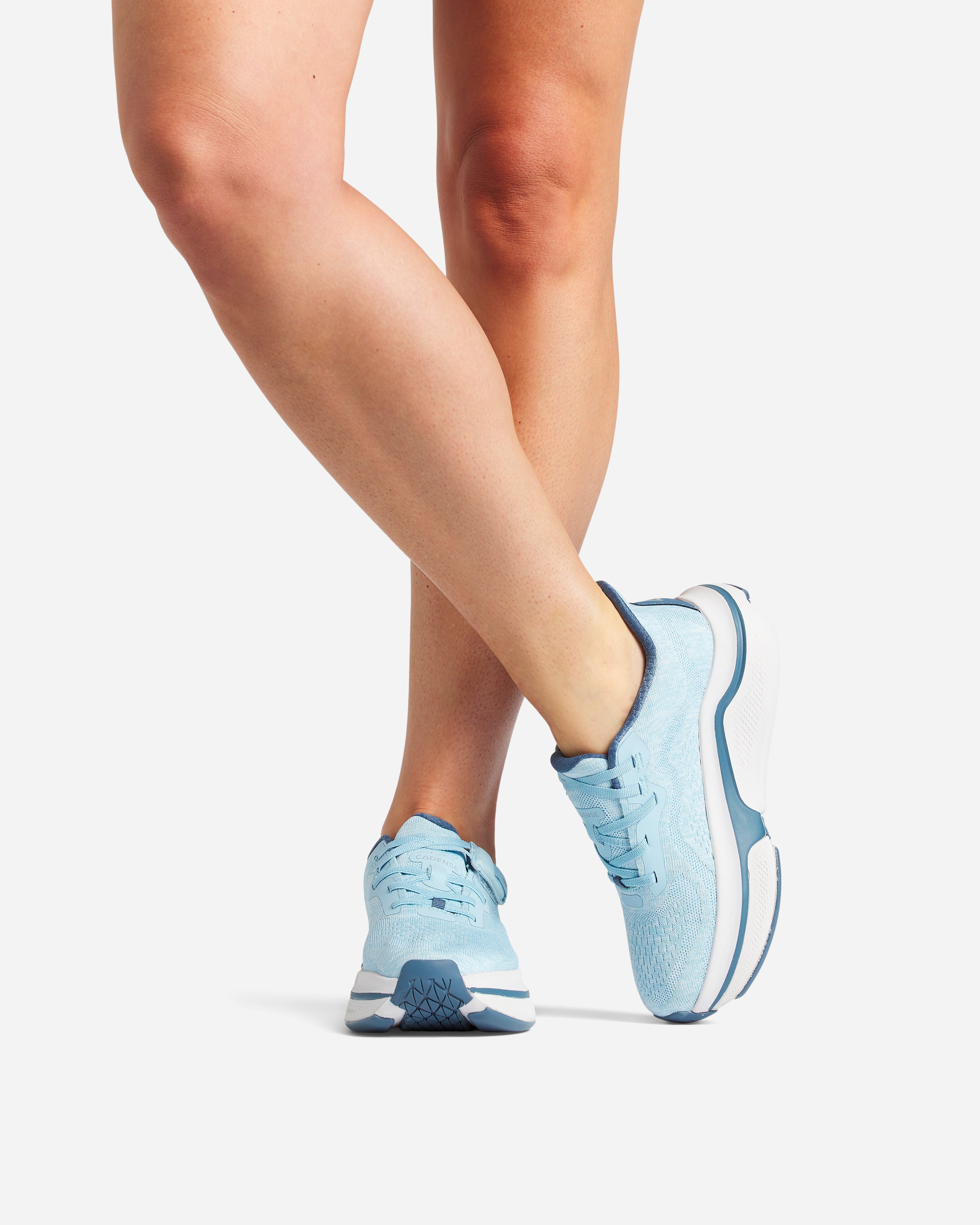
If you wear an Ankle-Foot Orthosis (AFO), you'll know the struggle of finding a trainer that fits over the plastic brace without being three sizes too big for your other foot. This is where adaptive brands like Cadense come in. Their trainers are specifically engineered with "variable friction" technology, allowing the trainer to slide more easily over minor obstacles — a real benefit for those who struggle to clear their toes during the swing phase of walking.
Beyond the Trainer: A Holistic Approach to Safety
Even the best trainers in the world can't do all the work. To truly minimise fall risk, footwear should be the foundation of a broader strategy.
-
Gait Training: A physiotherapist can help you analyse your walking pattern. They might suggest stepping over imaginary hurdles to break a shuffling habit, or practising tandem walking (heel-to-toe) to sharpen your balance.
-
Ankle Strengthening: Simple exercises like "alphabet toes" (tracing the alphabet in the air with your foot) or calf raises whilst holding onto a chair can significantly improve the fine-tuning muscles that prevent ankle rolls.
-
Home Safety Check: Most falls happen at home. Combine your new trainers with a no-trip environment: remove loose rugs, improve lighting in hallways, and install grab rails in high-risk areas like the bathroom.
Practical Tips for Your Next Purchase
-
Shop in the "Swelling Window": Your feet are at their largest in the late afternoon or evening. If you buy trainers at 10:00 AM, they may be uncomfortably tight by dinner time.
-
The "Socks" Rule: Always try on new trainers with the socks (or compression hosiery) you intend to wear daily.
-
The "Walk-Test" is Non-Negotiable: Don't just stand in the trainers. Walk on different surfaces in the shop — carpet and tile — to see how the grip feels.
-
Replace Early, Replace Often: Trainers have a mileage limit. Even if the upper looks brand new, the internal support structures and the external tread wear out. If you see the tread smoothing out or the heel leaning to one side, it's time for a new pair.
Walk Safely Now
Independence is a precious commodity, and it begins with the confidence to move. By choosing footwear that respects the biology of the ageing foot — prioritising a wide toe box, lightweight materials, and secure closures — you are effectively armouring yourself against one of the greatest risks to senior health.
Remember, a trainer is more than just a piece of clothing; it is a piece of medical equipment that you wear every single day. Invest in quality, prioritise fit over fashion, and give your feet the support they need to keep you moving forward.
Explore Cadense adaptive trainers, designed to help reduce accidents, trips, slips, and falls whilst supporting natural movement at cadense.co.uk.