Key Features to Look for in Trainers to Help Prevent Falls and Trips
Walking is something most of us take for granted until the moment it feels precarious. Whether due to ageing, injury, or neurological conditions, a reduction in balance, strength, or sensation can make every threshold and pavement feel like a potential hazard. However, mobility is the cornerstone of independence. It allows us to engage in hobbies and keeps us connected to our communities.
The connection between footwear and fall prevention is not merely anecdotal; it is a matter of physics and biomechanics. Your feet are your primary sensory interface with the world. They tell your brain where you are in space (proprioception) and how to adjust your weight to stay upright. When trainers interfere with this communication, the risk of a slip, trip, or fall increases significantly.
How Improper Footwear Creates a "Hazard Zone"
Most people choose trainers based on aesthetics or cushioning, but many popular designs actually work against the body's natural stability. Even minor design flaws can compound over the course of a day, leading to micro-stumbles that eventually result in a serious fall.
1. The Danger of Narrow Toe Boxes
Many modern trainers taper at the front, squeezing the toes together. This isn't just a matter of comfort; it's a matter of balance. Your big toe acts as a stabiliser — much like a kickstand on a bicycle. When it is pushed inward (hallux valgus), you lose a significant portion of your lateral stability. This makes you more likely to tip sideways when navigating uneven ground.
2. Heavy or Rigid Soles: The "Trip" Factor
As we age or deal with mobility challenges, our "swing phase" — the time our foot is in the air — often becomes lower to the ground. If a trainer has a heavy, clunky sole or a rigid construction that doesn't allow the foot to bend at the metatarsals, it becomes much easier to catch the toe on a rug, a doorframe, or a cracked pavement. This "toe drag" is a leading cause of trips.
3. The "Internal Slip"
If a trainer is too loose or lacks a proper fastening system, the foot slides around inside. This creates a lag time between your leg moving and your trainer gaining traction. This lack of "oneness" with the trainer makes it nearly impossible for the brain to accurately predict where the foot will land, leading to instability on stairs or slippery surfaces.
Key Features of Fall-Prevention Footwear
To turn your footwear into a tool for safety, you need to look past the brand name and evaluate the engineering. A truly safe trainer provides a "grounded" feeling whilst protecting the foot from the environment.
Wide Toe Box for "Foot Splay"
Look for trainers that are shaped like a human foot, not a pointed arrow. A wide toe box allows the toes to splay or spread out naturally. This increases the surface area of your contact with the ground, providing a wider base of support and significantly improving balance.
Lightweight, Low-Profile Soles
A trainer should be an extension of your body, not an anchor. Lightweight materials reduce the effort required to lift the feet, which helps combat the fatigue that often leads to stumbles later in the day. The sole should also be thin enough to provide ground feel — so your brain knows what kind of surface you're on — but thick enough to protect against sharp objects.
Secure, Adaptive Closures
Slip-on trainers are convenient, but they are often the least stable. To prevent falls, a trainer must be securely anchored to the midfoot.
-
Laces: Offer the most customisable fit
-
Hook-and-Loop (Velcro): Excellent for those with limited hand dexterity or arthritis
-
Bungee/Toggle: Provides a snug fit without the need for tying knots
Non-Slip Outsole Geometry
It's not just about rubber; it's about the tread pattern. Look for outsoles with multi-directional lugs that can grip both wet and dry surfaces. A rounded heel — sometimes called a "rocker bottom" in specific orthopaedic contexts — can also help facilitate a smoother transition from heel-strike to toe-off.

The Synergy: Footwear, Therapy, and Adaptive Support
Whilst a great pair of trainers is a vital tool, they are most effective when used as part of a holistic approach to movement safety.
Pairing with Physical Therapy
If you find yourself shuffling or feeling heavy on your feet, physical therapy can be transformative. Therapists work on:
-
Ankle Proprioception: Exercises that retrain the nerves in your feet to communicate with your brain more clearly
-
Dorsiflexion Strength: Strengthening the muscles that lift the toes, directly reducing the risk of tripping
-
Gait Training: Learning to adjust your stride length and heel-strike to make the most of the technology in your trainers
Supporting Braces and AFOs
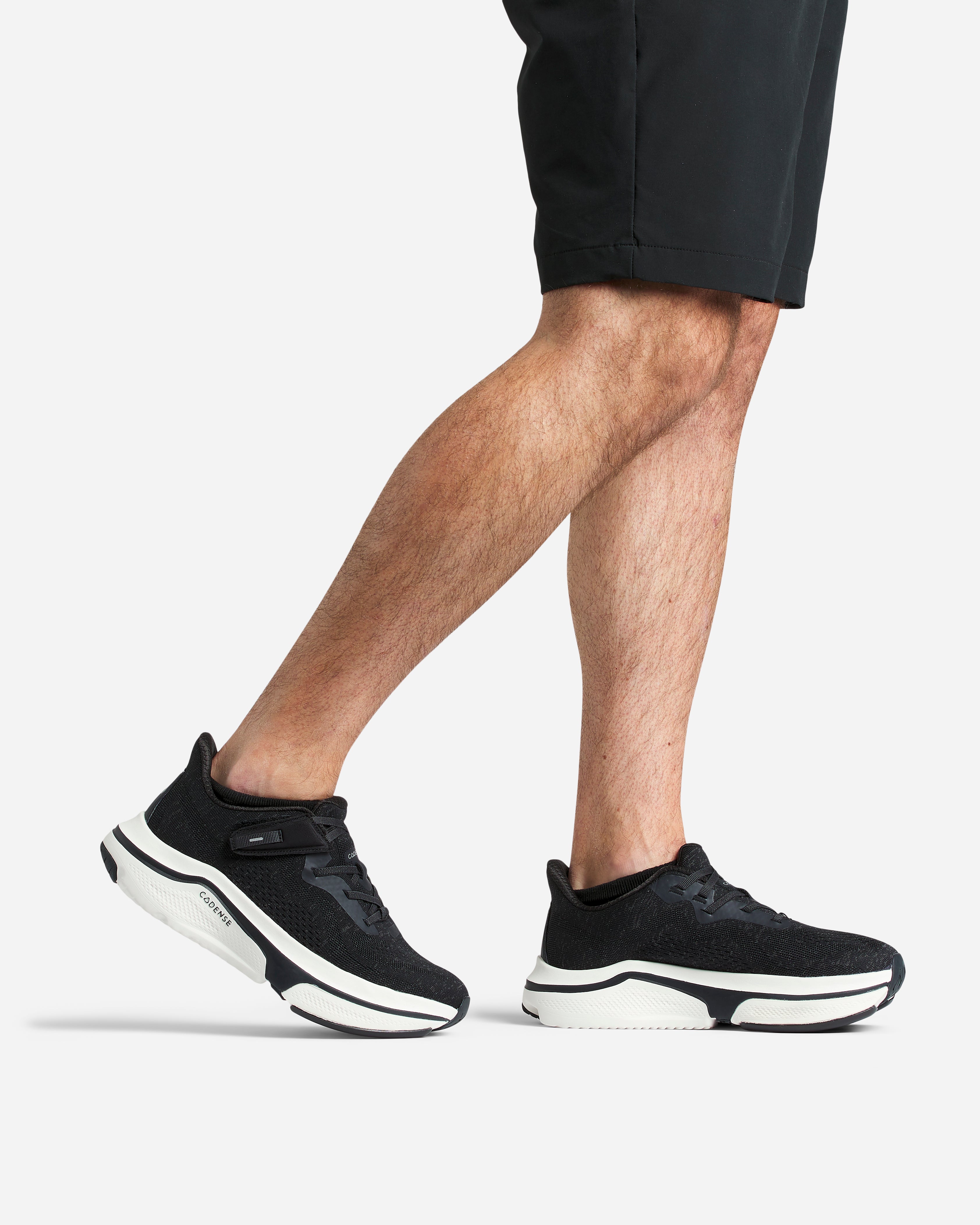
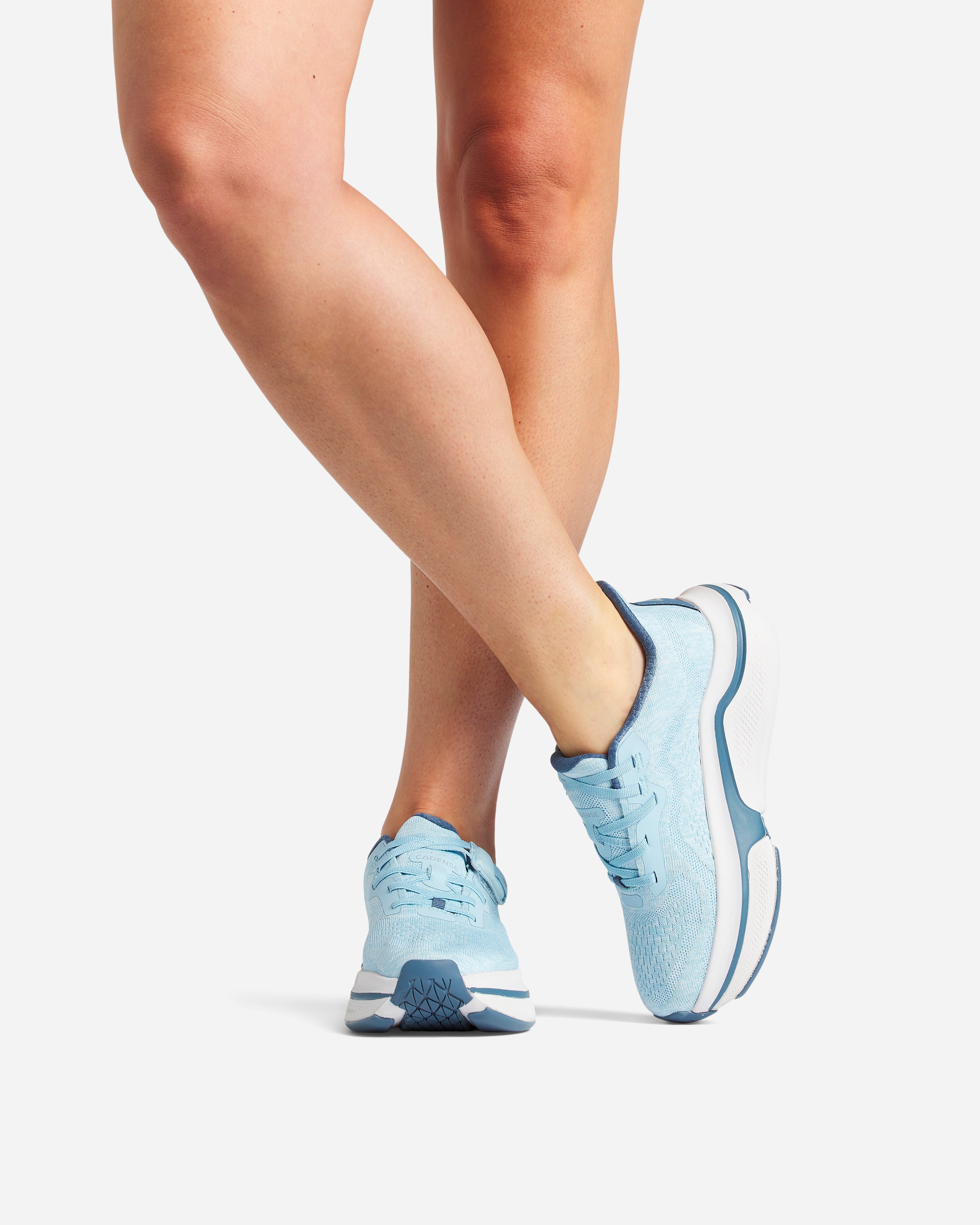
For individuals using Ankle Foot Orthoses (AFOs) or specialised braces to manage conditions like foot drop, standard trainers often won't fit. This is where adaptive footwear, such as Cadense trainers, becomes essential. These trainers are designed with extra depth and specialised friction-reduction zones that allow the trainer to glide over obstacles rather than catching on them, working in perfect harmony with the brace.
Expert Shopping & Maintenance Tips
Finding the right trainer is only half the battle; maintaining them and ensuring a proper fit is the other half.
To ensure long-term foot health and safety, it is best to shop for trainers in the afternoon because feet naturally swell throughout the day, meaning a pair that fits perfectly at 9:00 AM might be uncomfortably tight by 4:00 PM. When testing the fit, perform the "Index Finger" test by ensuring there is roughly a half-inch of space between your longest toe and the end of the trainer to prevent painful toe jamming.
Maintenance is equally important, so check the tread weekly; once the patterns on the sole wear smooth, they lose their grip and become as hazardous as ice skates on a slippery floor. Finally, since many falls occur on indoor hardwood or tile, consider keeping a dedicated pair of supportive "indoor-only" trainers rather than walking in socks or flimsy slippers to maintain consistent stability and protection.
Step Into a Safer Future
The transition from feeling "at risk" to feeling "confident" doesn't happen overnight, but it almost always starts from the ground up. By swapping out restrictive, heavy, or worn-out trainers for footwear designed with stability in mind, you are doing more than just preventing a fall — you are reclaiming your ability to move through the world without fear.
When your foundation is secure, you can focus less on the floor and more on the life happening around you. Whether that's a walk in the park or a busy afternoon of activities with the family, the right trainers make every step a safer one.
Explore Cadense adaptive trainers, designed to help reduce accidents, trips, slips, and falls whilst supporting natural movement at cadense.co.uk.