

Flexible vs Rigid AFO for Foot Drop: Which Option Supports Better Mobility?
TL;DR
-
Foot drop makes lifting the front of your foot difficult, increasing the risk of trips, slips, and falls
-
An ankle-foot orthosis (AFO) helps manage foot drop by supporting the foot and improving walking safety
-
Flexible AFOs allow more natural movement and suit mild to moderate foot drop
-
Rigid AFOs offer maximum stability and are better suited to more severe cases or early recovery
-
The right choice depends on your muscle function, lifestyle, and the guidance of your healthcare team
-
Paired with physiotherapy and adaptive trainers, either option can significantly improve walking safety and daily independence
What Is Foot Drop and Why Does It Matter?
Foot drop is a condition that makes it difficult to lift the front part of your foot when walking. Rather than stepping through naturally, the foot tends to drag or slap down, which significantly increases the risk of catching a toe, losing balance, and experiencing trips, slips, and falls.
It can affect people for a variety of reasons, including:
-
Neurological conditions such as stroke, multiple sclerosis, or Parkinson's disease
-
Peripheral neuropathy affecting the nerves in the lower leg
-
Spinal injuries or compressed nerves in the back
-
Leg or knee injuries that damage the peroneal nerve
An ankle-foot orthosis (AFO) is one of the most common and effective tools for managing foot drop. It supports the foot and ankle, helps lift the foot during walking, and reduces the risk of accidents. However, not all AFOs work in the same way, and choosing the right type is an important decision that affects comfort, mobility, and independence.
What Is a Flexible AFO for Foot Drop?
A flexible AFO is made from a softer, more pliable material that moulds around the foot and ankle whilst still providing meaningful support. Unlike a rigid brace, it allows a small degree of natural ankle movement, so your foot can respond more fluidly to changes in surface and walking speed.
This type of AFO is particularly well suited to people who have some residual muscle function in the lower leg, as it works with the body rather than taking over completely.
Key benefits of a flexible AFO:
-
Encourages a more natural gait by permitting slight ankle motion during each step
-
Reduces muscle fatigue during longer walks or more active days
-
Supports daily activities without overly restricting movement or causing discomfort
-
Works well alongside adaptive trainers for better overall stability and comfort
-
Often easier to wear for extended periods, making it more practical for everyday use
-
Less likely to cause compensatory strain on the knee and hip over time
Flexible AFOs are frequently recommended for people in the earlier stages of foot drop, those managing mild to moderate weakness, or those whose condition is stable and well managed.
What Is a Rigid AFO for Foot Drop?
A rigid AFO is constructed from firmer materials, typically hard plastic, and holds the foot and ankle in a fixed position. It does not allow any ankle movement, which means the brace does all of the work in keeping the foot lifted and stable throughout each step.
Rigid AFOs are typically recommended when:
-
There is severe muscle weakness with little to no residual function
-
The risk of tripping or falling is high and safety is the top priority
-
A person is in the early stages of recovery from a stroke or neurological event
-
A healthcare professional determines that limiting ankle motion is necessary to protect the joint
-
Maximum predictability and control over foot placement is needed
Whilst rigid AFOs offer maximum stability, they do come with trade-offs. Many people find them uncomfortable over long periods, and because they restrict natural walking motion, they can place additional strain on the knee and hip. Despite these challenges, for those who need them, rigid AFOs can be genuinely life-changing in terms of safety and confidence.

How Flexible and Rigid AFOs Compare
Both types of AFO serve the same fundamental purpose — keeping the foot lifted and reducing the risk of trips, slips, and falls — but they achieve this in quite different ways.
Flexible AFO:
-
Allows slight ankle motion for a more natural walking pattern
-
Reduces compensatory movements such as hip hiking or leg swinging
-
Better suited to active lifestyles and longer periods of wear
-
Pairs more easily with adaptive trainers due to a softer profile
-
Suited to mild to moderate foot drop with some residual muscle function
Rigid AFO:
-
Fully restricts ankle movement for maximum stability
-
Ideal for severe weakness or high fall risk
-
May increase fatigue and strain on surrounding joints over time
-
Can be harder to fit comfortably within standard footwear
-
Often used during early recovery or in clinical settings
In practice, some people transition from a rigid to a flexible AFO as their strength and confidence improve. Others may use different braces for different activities. The right choice is always an individual one, made in partnership with a physiotherapist or orthotist who understands your specific condition and goals.
How AFOs Work With Therapy and Foot Drop Footwear
An AFO works best as part of a broader approach that includes professional guidance, regular movement, and appropriate footwear. Each element reinforces the others:
-
Physiotherapy — strengthens ankle and leg muscles, improves gait mechanics, and teaches safe navigation of stairs, uneven ground, and outdoor environments
-
Consistent AFO use — maintains foot lift and reduces fall risk across all daily activities, not just during exercise
-
Adaptive trainers — designed to accommodate an AFO comfortably, with a wide toe box, flexible soles, and easy on/off access that works alongside the brace rather than against it
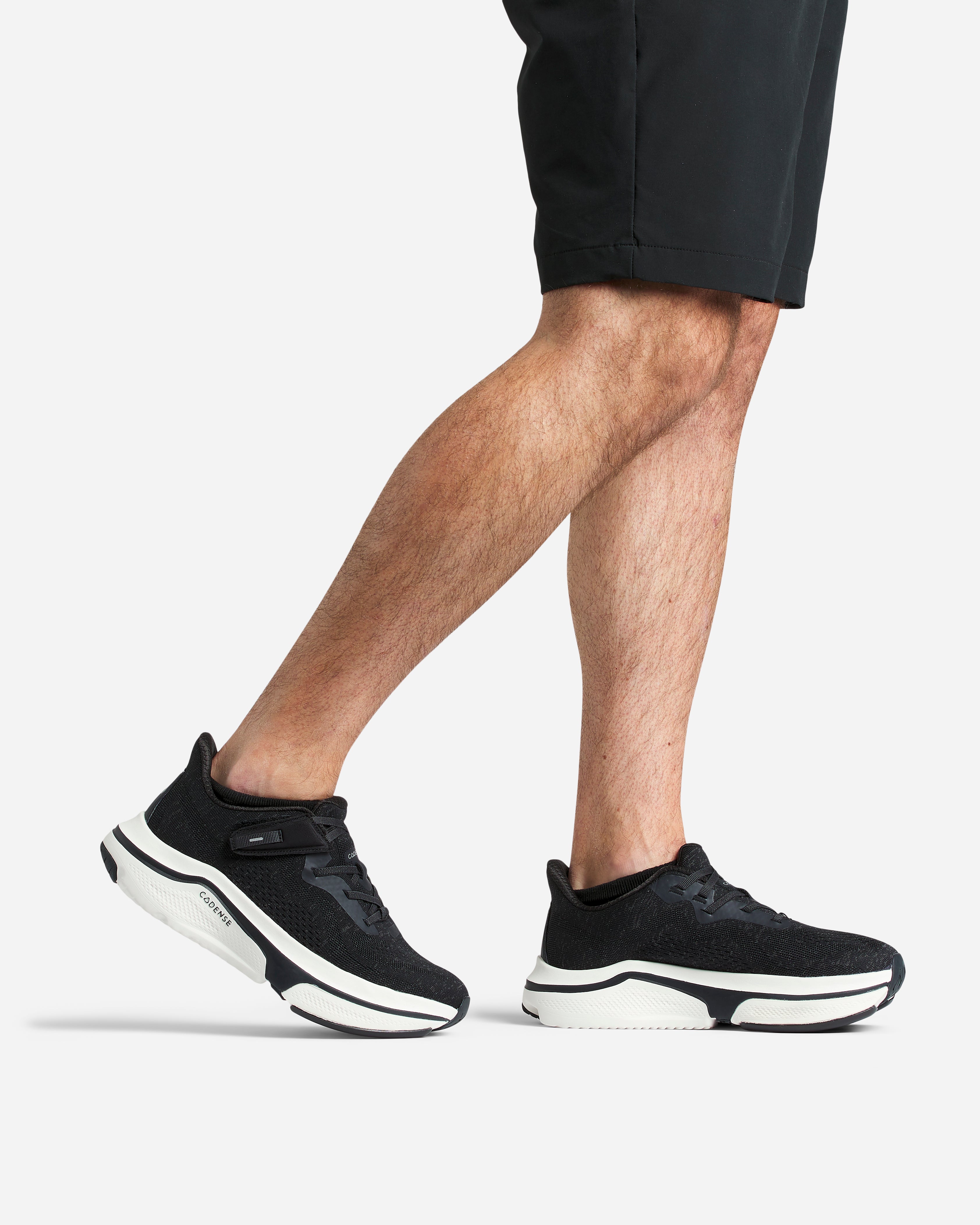
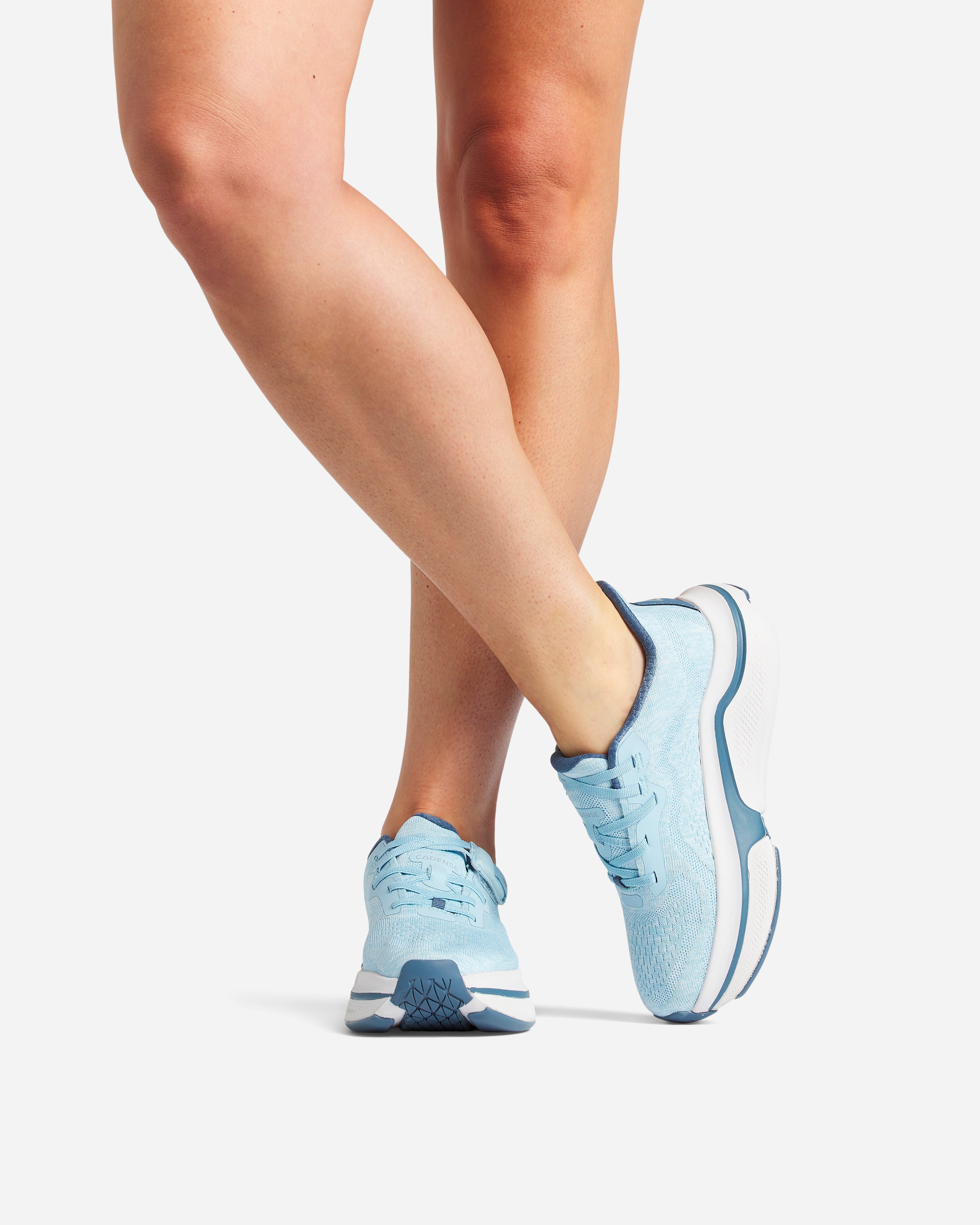
Standard trainers often do not accommodate an AFO well, which can affect both comfort and safety. Cadense adaptive trainers are designed with this in mind, helping to:
-
Fit properly around the brace without creating pressure points
-
Support natural foot positioning and balance
-
Complement the movement permitted by a flexible AFO
-
Reinforce safe walking habits and reduce trips, slips, and falls day to day
Tips for Daily Use of Flexible or Rigid AFOs
Getting the most out of an AFO requires consistency and attention to how the brace is working for you. Here are some practical tips:
-
Practise walking with the AFO under professional guidance before using it independently in all environments
-
Always pair your brace with supportive, well-fitted trainers to maximise stability and comfort
-
Check the fit every day, particularly around the heel and ankle, to avoid pressure sores or skin irritation
-
Adjust your activity levels according to how your body feels — fatigue can affect balance even when wearing a brace
-
Keep your physiotherapist or orthotist informed of any changes in fit, comfort, or walking ability so adjustments can be made promptly
-
Wear your AFO consistently, even on days when you feel well, as irregular use can disrupt your gait pattern and increase fall risk
-
Combine brace use with strength and balance exercises recommended by your therapy team
Choose What's Good for You
There is no single right answer when it comes to choosing between a flexible and rigid AFO. The best option is the one that fits your level of muscle function, your daily lifestyle, your comfort needs, and the guidance of the healthcare professionals supporting your care.
Whether you are newly diagnosed with foot drop, recovering from a neurological event, or looking to improve your current mobility setup, understanding your options is a worthwhile and empowering step. Paired with regular therapy and the right adaptive footwear, the right AFO can make a meaningful difference to your independence and quality of life.
Explore Cadense adaptive trainers, designed to work alongside AFOs and help reduce accidents, trips, slips, and falls whilst supporting natural movement at cadense.co.uk.

%20helps%20manage%20foot%20drop%20by%20supporting%20the%20foot%20and%20imp...)