
Physical Therapy Techniques for Gait Improvement After Injury or Foot Drop
TL;DR
-
Gait problems after injury or foot drop include toe dragging, shortened stride, and compensatory movements that increase fall risk
-
Physical therapy addresses these through strengthening exercises, balance training, gait retraining, and functional mobility drills
-
Techniques like ankle dorsiflexion exercises, heel-to-toe walking, and stair navigation practice help restore safe, natural movement
-
AFO braces and adaptive trainers work alongside therapy to maximise gait improvement and daily safety
-
Consistency, early intervention, and working with a qualified physiotherapist lead to the best long-term outcomes
Walking can become challenging after an injury or when conditions like foot drop affect the muscles that lift and control the foot. Difficulty lifting the front of the foot, dragging toes, or experiencing fatigue during short walks can make daily mobility feel risky and exhausting.
Physical therapy focuses on restoring strength, improving balance, and retraining the nervous system to walk safely and efficiently. With the right techniques, individuals can regain confidence, reduce the risk of trips and falls, and build a stronger foundation for long-term independence.
This guide covers the most effective physical therapy techniques for gait improvement and explains how each one contributes to safer, more controlled daily movement.
Understanding Gait Challenges After Injury or Foot Drop
Gait refers to the pattern and mechanics of how a person walks. It is a complex process that relies on coordinated communication between the muscles, joints, and nervous system. When any part of that system is disrupted by injury, nerve damage, or muscle weakness, the way a person walks can change significantly.
Common gait problems associated with foot drop and lower limb injuries include:
-
Foot drop: difficulty lifting the front of the foot during the swing phase of walking, causing the toes to drag on the ground
-
Shortened stride: taking smaller steps to compensate for weakness or instability, which reduces efficiency and increases fatigue
-
Altered balance: shifting weight unevenly to maintain stability, which places additional strain on the hips, knees, and lower back
-
Hip or knee compensation: swinging the leg outward or lifting the knee higher than normal to avoid toe dragging, known as a steppage or circumduction gait
-
Foot slap: the foot landing flat rather than in a controlled heel-to-toe motion, creating a slapping sound and reducing ground feel
Recognising these patterns early is important. The longer compensatory habits go unaddressed, the harder they become to retrain. A qualified physiotherapist can assess gait, identify the root cause of each problem, and design a structured programme that targets the specific muscles and movement patterns involved.
Key Physical Therapy Techniques for Gait Improvement
1. Strengthening Exercises
Weakness in the lower leg, ankle, or foot muscles is one of the most common contributors to poor gait. Rebuilding strength in these areas provides the muscular support needed to lift the foot properly, push off effectively, and maintain stability throughout each step.
Exercises commonly used in physiotherapy for gait improvement include:
-
Ankle dorsiflexion with resistance bands: directly targets the tibialis anterior, the primary muscle responsible for lifting the foot during walking
-
Calf raises: strengthens the gastrocnemius and soleus muscles, improving push-off power and stability during the propulsion phase of gait
-
Toe curls and towel scrunches: activate the smaller intrinsic foot muscles, which play a crucial role in balance and fine motor control during walking
-
Seated leg presses and step-ups: build overall lower limb strength, supporting the hip and knee stability needed for a controlled gait pattern
-
Heel walks and toe walks: challenge dorsiflexion and plantarflexion alternately, reinforcing neuromuscular control across the full range of ankle motion
Strengthening exercises are most effective when performed consistently and progressively. A physiotherapist will monitor muscle response and adjust resistance or repetitions to ensure steady improvement without overloading recovering tissue.
2. Balance Training
Balance and gait are closely linked. Poor balance forces the body into compensatory patterns that disrupt natural walking mechanics and increase the risk of falls. Balance training helps recalibrate the proprioceptive system, which is the body's ability to sense its own position in space, allowing more confident and controlled movement.
Effective balance training techniques include:
-
Single-leg stance: standing on one foot, with support nearby if needed, to challenge stability and build ankle and hip control
-
Heel-to-toe walking: placing one foot directly in front of the other encourages proper foot placement and coordination along the midline of the body
-
Dynamic balance drills: shifting weight forwards, backwards, and side to side whilst standing, simulating the balance demands of real-world walking
-
Balance board or wobble board training: introduces controlled instability to further challenge and develop proprioceptive responses
-
Perturbation training: a therapist gently challenges balance by introducing small external disruptions, training the body to respond quickly and safely
Balance training should always be performed in a safe environment with appropriate support nearby, particularly in the early stages of rehabilitation or for those with a high fall risk.

3. Gait Retraining
Gait retraining involves working directly on walking mechanics to restore a more natural, efficient movement pattern. This is one of the most targeted and impactful elements of physiotherapy for foot drop and post-injury recovery.
Techniques used in gait retraining include:
-
Step length and timing practice: using visual or auditory cues to encourage consistent, symmetrical steps and address the tendency to shorten or rush the stride
-
Foot placement cues: directing attention to heel strike, toe clearance, and controlled foot lowering to rebuild a safe heel-to-toe gait pattern
-
Mirror or video feedback: allowing individuals to observe their own walking pattern in real time and make conscious adjustments to posture and foot position
-
Treadmill-based gait training: provides a controlled environment for practising walking at different speeds, with the option of partial body weight support in early rehabilitation stages
-
Verbal and tactile cueing: physiotherapists use spoken guidance and gentle physical prompts to direct attention to specific movement patterns and reinforce correct technique
Gait retraining works by creating new neuromuscular pathways through repetition. The brain learns to recruit the right muscles at the right time, gradually making safe, efficient walking feel more natural and automatic.
4. Functional Mobility Drills
Strengthening and balance exercises are essential, but they need to translate into real-world function. Functional mobility drills bridge the gap between clinical rehabilitation and the practical demands of everyday life.
Examples of functional drills used in gait rehabilitation include:
-
Stair navigation practice: builds the strength, coordination, and confidence needed to ascend and descend stairs safely, which is a common challenge for people with foot drop
-
Obstacle course training: navigating around or over objects in a controlled environment trains foot clearance, spatial awareness, and rapid weight shifting
-
Turning and direction changes: practising turning whilst walking improves adaptability and reduces the risk of losing balance when changing direction in busy or confined spaces
-
Outdoor walking practice: transitioning from a clinic or home environment to pavements, uneven ground, and slopes prepares individuals for the unpredictability of real-world surfaces
-
Dual-task training: combining walking with a secondary cognitive task, such as carrying an object or having a conversation, challenges attention and coordination in a way that mirrors everyday demands
Functional drills are most valuable when they are tailored to the specific environments and activities that matter most to each individual, whether that is navigating a busy supermarket, walking in the garden, or managing stairs at home.
5. Assistive Devices and Braces
Physical therapy is often most effective when combined with the right assistive devices. These tools provide additional support during rehabilitation and continue to play a practical role in daily life once formal therapy concludes.
-
Ankle-foot orthoses (AFOs): hold the foot in a lifted position during the swing phase of walking, preventing toe drag and reducing the risk of trips and falls
-
Walking sticks or frames: provide extra stability whilst strength and balance are being rebuilt, allowing individuals to practise walking with greater confidence and lower fall risk
-
Functional electrical stimulation (FES): a technology that uses small electrical pulses to stimulate the nerve responsible for lifting the foot, helping to restore a more natural gait pattern in some individuals with foot drop
-
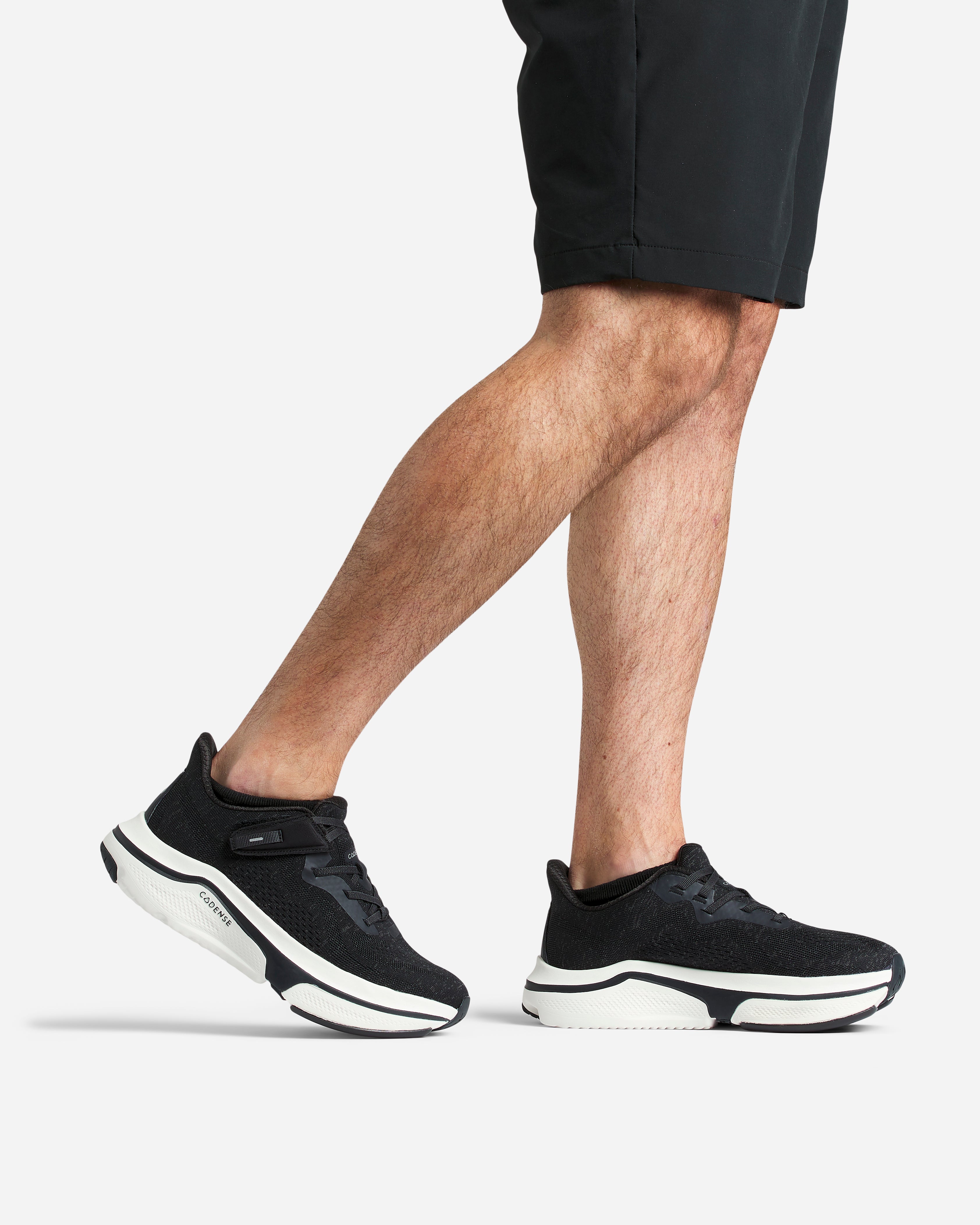
Adaptive trainers: designed to accommodate AFOs and orthotics comfortably, with extra depth, firm soles, and easy on/off access that supports both therapy goals and daily independence
The combination of structured physiotherapy, appropriate assistive devices, and well-fitted adaptive trainers creates the most comprehensive foundation for gait improvement and long-term mobility.
What to Expect From a Gait Improvement Programme
Progress in gait rehabilitation varies depending on the underlying cause, the severity of weakness or nerve damage, and how consistently the programme is followed. That said, several principles apply broadly:
-
Early intervention leads to better outcomes: the sooner gait problems are addressed, the less time compensatory habits have to become ingrained
-
Consistency matters more than intensity: short, regular practice sessions are generally more effective than occasional longer ones
-
Progress should be monitored: a physiotherapist will track stride length, balance, endurance, and quality of movement over time and adjust the programme accordingly
-
Setbacks are normal: fatigue, illness, or changes in condition may temporarily affect progress, but a well-structured programme accounts for this and adapts as needed
Open communication with your physiotherapist is essential throughout the process. Sharing what is working, what is difficult, and what daily activities remain challenging helps ensure the programme stays relevant and effective.
Start Your Gait Improvement Journey Today
Physical therapy techniques for gait improvement address the root causes of unsafe or inefficient walking, from muscle weakness and poor balance to faulty movement patterns and limited functional mobility. When combined with the right assistive devices and supportive footwear, these techniques can help individuals regain confidence, reduce fall risk, and move through daily life with greater ease and independence.
Find a Cadense Coach near you for guidance on physiotherapy exercises, braces, and adaptive trainers designed to support gait improvement and safer walking every day at cadense.co.uk.