What Physiotherapists Should Look for in Trainers for Stroke Patients
For stroke survivors, learning to walk again can be one of the most challenging — yet most rewarding — parts of recovery. As a physiotherapist, you understand how much gait mechanics, balance, and proprioception influence overall mobility. But one piece of the rehabilitation puzzle that’s often overlooked is footwear.
The right trainers for stroke patients can make gait retraining more effective, reduce fatigue, and help people feel safer and more confident with every step. The wrong footwear, however, can compromise alignment, increase instability, or stall progress in therapy sessions.
Here’s what physiotherapists need to consider when recommending trainers for people recovering from a stroke.
Why Standard Trainers Often Don’t Work
After a stroke, many patients experience weakness, spasticity, reduced coordination, or partial paralysis — especially in the lower limbs. These changes influence how the foot makes contact with the ground. Common post-stroke gait challenges such as foot drop, uneven weight distribution, reduced dorsiflexion, and compromised balance make it difficult to walk safely in standard trainers.
Typical off-the-shelf trainers often have:
-
Narrow openings that are hard to manage with reduced hand strength
-
Thin soles that offer little cushioning or shock absorption
-
Laces requiring dexterity patients may no longer have
-
Flat, non-supportive insoles that don’t accommodate AFOs (ankle–foot orthoses)
Not only does this make everyday use harder, but it also reduces independence — something most patients are working to rebuild.
Key Features Physiotherapists Should Look For
1. Wide-Opening, Easy-Access Designs
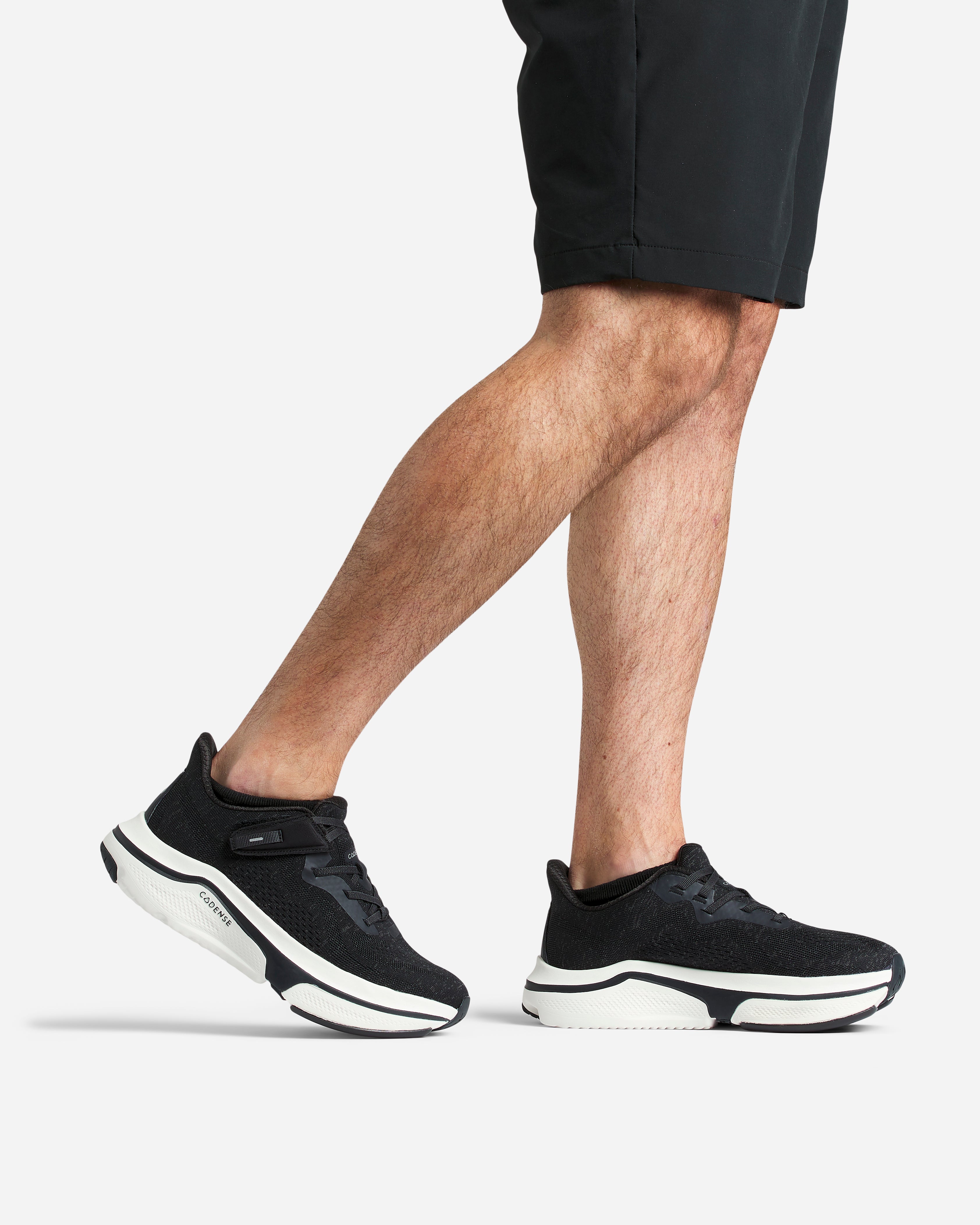
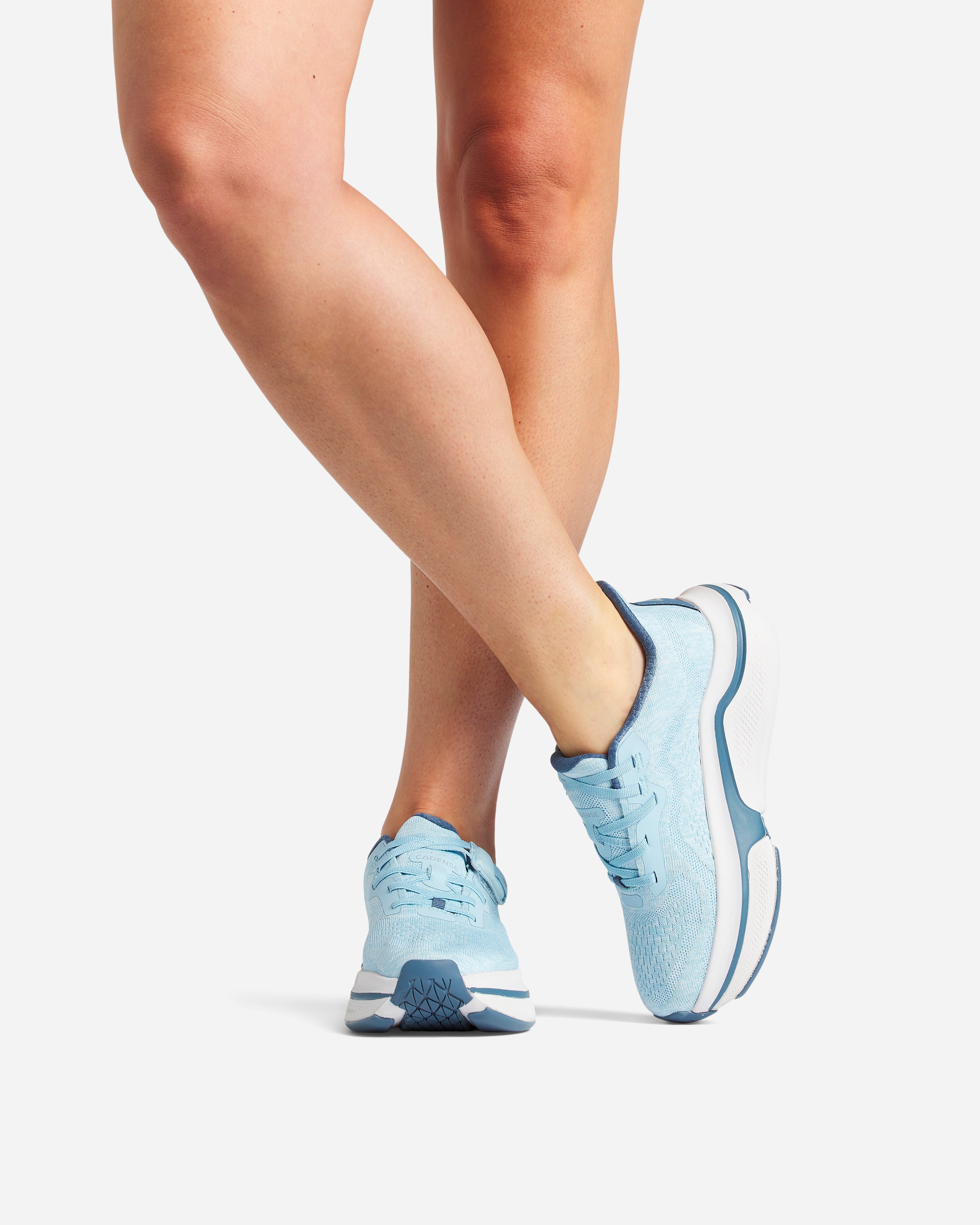
Many stroke survivors have one-sided weakness or reduced motor control. Trainers that fully open and feature zips or hook-and-loop fastenings (Velcro) allow the foot to slip in easily, helping patients put them on independently.
2. Stable, Non-Slip Outsoles
Balance concerns are common after a stroke. Trainers with a firm, wide base and slip-resistant outsoles help patients feel grounded and reduce the risk of trips or slips during therapy, at home, or outdoors.
3. Support for Weak Ankles and Foot Drop
Post-stroke gait changes often include ankle instability and difficulty lifting the foot. Trainers that support dorsiflexion and provide structured ankle security can make gait training smoother and safer.
AFO-compatible trainers — with appropriate depth and flexible uppers — are essential for many patients.
4. Lightweight, Cushioned Construction
Stroke survivors typically fatigue more quickly. Lightweight trainers with responsive cushioning help reduce strain and extend the duration of therapy sessions, improving the overall quality of gait retraining.
5. Adjustable Fit & Removable Insoles
Many patients experience swelling, asymmetry, or altered foot shape. Adjustable fastenings and removable footbeds allow physiotherapists and patients to tailor the fit and accommodate orthotics comfortably.
6. Flexible Yet Structured Upper
A good upper gives support through the midfoot while allowing enough flexibility in the forefoot to encourage natural movement. Breathable materials help keep feet comfortable during prolonged wear.

Practical Examples from Clinical Practice
Physiotherapists in neurorehabilitation frequently see the difference suitable footwear can make:
-
A 62-year-old patient with mild left-side weakness gained confidence and improved stride length by switching to adaptive trainers with a wide heel base and slip-resistant soles.
-
A 55-year-old stroke survivor using an AFO found it easier to navigate uneven ground when wearing trainers with a deeper toe box and removable insoles.
-
A home-based patient was able to put trainers on independently for the first time in months thanks to a pair with side-zip openings.
In each case, choosing supportive footwear didn’t just improve walking — it boosted independence, confidence, and daily function.
How the Right Trainers Support Gait Retraining
When physiotherapists choose footwear that aligns with the patient’s rehabilitation goals, gait improvements accelerate.
Supportive trainers help by:
-
Improving proprioceptive feedback — firm but cushioned soles enhance awareness of foot placement
-
Encouraging better weight transfer — proper heel and midfoot support aid balance
-
Reducing compensatory movements — supportive fits reduce the need for exaggerated hip hikes or circumduction
-
Increasing participation — comfortable trainers help patients walk more frequently outside therapy sessions
This makes footwear an active tool in the rehabilitation process — not just an accessory.
Guidance for Recommending Trainers to Stroke Patients
When advising patients or carers:
-
Let them test pairs in a safe environment to assess ease of entry, stability, and comfort
-
Check AFO compatibility before finalising a recommendation
-
Observe gait with and without the trainers — small differences often matter
-
Encourage gradual adjustment so the patient adapts to new support levels
These steps help ensure footwear supports the therapy plan rather than hindering it.
The Bottom Line
Recovery after a stroke involves rebuilding strength, coordination, and confidence — step by step. As a physiotherapist, you have a direct influence on each part of that journey.
Choosing the right trainers for stroke patients isn’t about fashion or convenience. It’s about function, safety, and long-term progress. The right pair helps patients regain control of their movement and, ultimately, their independence.
Explore Cadense UK to see how adaptive trainers can help your patients walk more confidently, stay safer, and progress further in rehabilitation programmes.